Understanding Various Types of Eye Surgery

Understanding Various Types of Eye Surgery

Overview

Eye surgery encompasses a range of procedures aimed at correcting vision problems, treating eye diseases, and improving overall eye health.

Introduction

Eye surgery encompasses a range of procedures aimed at correcting vision problems, treating eye diseases, and improving overall eye health. From laser eye surgery to cataract removal, these procedures have advanced significantly, offering effective solutions for various eye conditions. This blog explores the different types of eye surgery, their benefits, and important considerations for those considering these procedures.

LASIK (Laser-Assisted In Situ Keratomileusis)

LASIK is one of the most popular and well-known types of laser eye surgery. It is used to correct refractive errors such as nearsightedness, farsightedness, and astigmatism. The procedure involves reshaping the cornea to improve the eye's ability to focus light on the retina. LASIK offers quick recovery times and significant improvements in vision for most patients. Benefits of LASIK include:
Most patients experience improved vision within 24 to 48 hours.

Quick Recovery

LASIK has a high success rate with a low risk of complications.

High Success Rate

Results are typically long-lasting, reducing the need for glasses or contact lenses.

Long-Term Results

PRK (Photorefractive Keratectomy)

PRK is another type of laser eye surgery used to correct refractive errors. Unlike LASIK, PRK does not involve creating a flap in the cornea. Instead, the outer layer of the cornea is removed, and the underlying tissue is reshaped with a laser. PRK is often recommended for patients with thin corneas or those who are not suitable candidates for LASIK. Benefits of PRK include:
Ideal for patients who are not eligible for LASIK due to corneal thickness.

Suitable for Thin Corneas

Eliminates the risk of flap-related complications.

No Flap Complications

Provides stable and long-lasting vision correction.

Stable Results

Cataract Surgery

Cataract surgery is a common procedure used to remove the cloudy lens of the eye and replace it with an artificial intraocular lens (IOL). This surgery is typically performed on an outpatient basis and has a high success rate in restoring clear vision. Cataract surgery is particularly beneficial for older adults who experience vision loss due to cataracts. Key points about cataract surgery include:
Patients can go home the same day.

Outpatient Procedure

Cataract surgery is one of the most successful surgeries performed.

High Success Rate

Restores clear vision, significantly improving quality of life.

Improves Quality of Life

Glaucoma Surgery

Glaucoma surgery is performed to reduce intraocular pressure and prevent further damage to the optic nerve. There are several types of glaucoma surgeries, including trabeculectomy, laser trabeculoplasty, and minimally invasive glaucoma surgery (MIGS). These procedures help manage glaucoma and preserve vision. Benefits of glaucoma surgery include:
Effective in lowering eye pressure to prevent optic nerve damage.

Reduces Intraocular Pressure

Helps maintain vision and prevent further loss.

Prevents Vision Loss

Various surgical techniques tailored to patient needs.

Multiple Surgical Options

Retinal Surgery

Retinal surgery includes procedures to repair retinal detachments, treat diabetic retinopathy, and address macular degeneration. Common retinal surgeries include vitrectomy, scleral buckling, and laser photocoagulation. These procedures are essential for preserving vision and preventing further retinal damage. Key benefits of retinal surgery include:
Prevents further vision loss and may restore lost vision.

Preserves Vision

Addresses a variety of retinal conditions effectively.

Treats Multiple Conditions

Utilizes cutting-edge technology for optimal outcomes.

Advanced Techniques

Corneal Transplant

A corneal transplant, or keratoplasty, involves replacing a damaged or diseased cornea with a healthy donor cornea. This surgery is often performed to treat conditions such as keratoconus, corneal scarring, and corneal dystrophy. Corneal transplants can significantly improve vision and quality of life for patients with severe corneal issues. Important points about corneal transplants include:
Can restore vision lost due to corneal damage.

Restores Vision

Most patients experience significant improvements in vision.

High Success Rate

Includes full-thickness and partial-thickness transplants.

Multiple Transplant Types

Refractive Lens Exchange (RLE)

RLE, also known as clear lens extraction, is a procedure where the eye's natural lens is replaced with an artificial lens to correct refractive errors. This surgery is similar to cataract surgery and is often recommended for patients with severe farsightedness or presbyopia. RLE can reduce dependence on glasses or contact lenses. Benefits of RLE include:
Effective for patients with high levels of farsightedness.

Corrects Severe Refractive Errors

Provides stable and lasting vision correction.

Long-Lasting Results

Suitable for patients not eligible for LASIK or PRK.

Alternative to LASIK

Implantable Collamer Lenses (ICL)

ICL surgery involves implanting a collamer lens in front of the natural lens to correct refractive errors. This procedure is an alternative to LASIK and PRK for patients with high levels of myopia or thin corneas. ICL provides excellent visual outcomes and is reversible if necessary. Key benefits of ICL include:
Lens can be removed if needed.

Reversible Procedure

Provides sharp and clear vision.

High Quality Vision

Effective for patients with severe nearsightedness.

Suitable for High Myopia

Pediatric Eye Surgery

Pediatric eye surgeries address various eye conditions in children, such as strabismus (crossed eyes), congenital cataracts, and pediatric glaucoma. Early intervention through surgical procedures can correct these issues and support healthy visual development in children. Key points about pediatric eye surgery include:
Corrects eye issues early to promote healthy vision development.

Early Intervention

Utilizes techniques tailored to pediatric patients.

Specialized Techniques

Enhances visual function and overall quality of life for children.

Improves Quality of Life

Reconstructive Eye Surgery

Reconstructive eye surgery focuses on repairing and restoring the structure and function of the eye after injury or trauma. This includes procedures to repair orbital fractures, correct eyelid malpositions, and address other structural issues that impact vision and eye health. Benefits of reconstructive eye surgery include:
Repairs damage to restore normal eye function.

Restores Function

Addresses cosmetic concerns to improve appearance.

Improves Appearance

Provides a holistic approach to eye health and function.

Comprehensive Care

Oculoplastic Surgery

Oculoplastic surgery involves cosmetic and reconstructive procedures around the eyes and the surrounding structures. These surgeries include eyelid lifts (blepharoplasty), removal of tumors around the eyes, and repair of tear duct obstructions. Oculoplastic surgery can enhance both the function and appearance of the eyes. Key benefits of oculoplastic surgery include:
Improves the aesthetic appearance of the eyes and surrounding areas.

Enhances Appearance

Addresses functional problems such as tear duct obstructions and eyelid malpositions.

Corrects Functional Issues

Provides a combination of cosmetic and functional improvements.

Comprehensive Care

Conclusion

Understanding the different types of eye surgery and their benefits can help individuals make informed decisions about their eye health. Each type of surgery offers unique advantages and is suited for specific conditions. Consulting with an ophthalmologist is essential to determine the most appropriate procedure based on individual needs and eye health. With advancements in technology, eye surgeries have become safer and more effective, providing hope for those seeking improved vision and quality of life.


Frequently Asked Questions

What is the difference between LASIK and PRK, and how do I know which one I need?

Both LASIK and PRK use an excimer laser to reshape the cornea and correct refractive errors — nearsightedness, farsightedness, and astigmatism — but they differ in how the corneal surface is prepared. In LASIK, the surgeon creates a thin hinged flap in the outer cornea using a microkeratome or femtosecond laser, lifts it, applies the laser to the underlying stromal tissue, then replaces the flap. Recovery is rapid — most patients see clearly within 24–48 hours. In PRK, no flap is created; instead the outer epithelial layer is removed entirely, the laser reshapes the exposed cornea, and the epithelium regrows over 3–5 days. Recovery takes longer (1–2 weeks for comfortable vision, 1–3 months for full stabilisation) but there is no flap to displace — which matters for contact-sport athletes, military personnel, and anyone at risk of eye trauma. The key selection criteria: if your cornea is thin or has surface irregularities, PRK is preferred because LASIK requires sufficient corneal tissue to create the flap safely. LASIK is typically favored for patients who need a fast return to work. Both achieve equivalent long-term visual outcomes. The decision is made by your ophthalmologist after corneal topography mapping — not something you can determine from symptoms alone.

How does cataract surgery work, and will I need glasses afterwards?

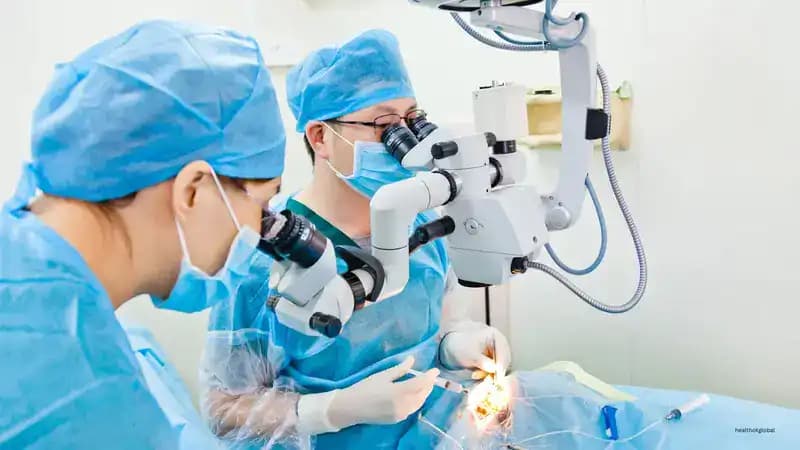
Cataract surgery removes the clouded natural lens of the eye and replaces it with a clear artificial intraocular lens (IOL) implanted in the same capsular bag. It is performed under local anaesthetic as a day procedure and typically takes 15–30 minutes. The most common technique is phacoemulsification — an ultrasound probe breaks the cataract into small fragments that are suctioned out through a 2–3mm incision, and the IOL is folded and inserted through the same small opening, avoiding the need for stitches in most cases. The choice of IOL determines whether you will need glasses after surgery. Monofocal IOLs correct vision at one distance (usually distance); most patients still need reading glasses. Toric IOLs also correct astigmatism. Multifocal or extended-depth-of-focus (EDOF) IOLs aim to reduce spectacle dependence for both distance and near, though some patients experience halos or glare at night. In India, surgery is typically done one eye at a time with a few weeks between eyes. Vision stabilises within days to a few weeks. Cataract surgery is one of the highest-volume and highest-success procedures in ophthalmology globally — visual improvement is achieved in over 95% of uncomplicated cases.

What surgeries are available for glaucoma, and do they cure the condition?

Glaucoma surgery does not cure glaucoma — the optic nerve damage already done is permanent. The goal of surgery is to lower intraocular pressure (IOP) to slow or stop further damage and preserve the remaining vision. Several approaches exist depending on glaucoma type and severity. Laser trabeculoplasty (SLT or ALT) uses a laser to improve drainage through the trabecular meshwork; it is often tried before incisional surgery and can lower IOP by 20–30% in suitable patients, with effects lasting several years and repeatable. Trabeculectomy (filtering surgery) creates a new drainage channel under the conjunctiva — a small flap in the sclera allows fluid to escape into a bleb (a blister under the eyelid); IOP reduction is significant but carries risks including infection and hypotony. MIGS (minimally invasive glaucoma surgery) procedures — iStent, Hydrus, XEN gel stent — are newer approaches with lower risk profiles, often performed alongside cataract surgery; they achieve moderate IOP reduction. Cyclophotocoagulation (laser to the ciliary body) reduces aqueous production and is used in advanced or refractory cases. After any glaucoma surgery, ongoing IOP monitoring and often ongoing drops are still required. Surgery is not the end of glaucoma management — it is one tool within lifelong care.

What should I expect before and after any eye surgery — preparation, recovery, and risks?

Preparation: stop contact lens use 1–2 weeks before assessment (contact lenses alter corneal shape); arrange transport as you cannot drive post-procedure; disclose all medications (especially blood thinners for procedures requiring injections). On the day: eye drops are used to dilate or numb the eye; most eye surgeries are performed under topical (drop) anaesthetic, occasionally supplemented with a sedative; you are awake but should feel no pain, only pressure. Immediately after: vision may be blurry, the eye may water and feel gritty — do not rub it; protective goggles or a shield are usually worn for the first night. Recovery timeline varies by procedure: LASIK — clear vision within 1–2 days, avoid swimming for 2 weeks; cataract — functional vision within days, avoid strenuous activity and swimming for 4 weeks; PRK — comfortable vision in 1–2 weeks, avoid UV exposure for 3 months; retinal surgery — recovery 2–8 weeks depending on technique, posturing (face-down) may be required. Risks common to all eye surgery: infection (rare, serious — any sudden pain, redness, or vision loss post-op is an emergency), inflammation, raised pressure. Procedure-specific risks: LASIK — flap displacement, dry eyes, halos; cataract — posterior capsule opacification (treatable with YAG laser), IOL dislocation; glaucoma surgery — hypotony, bleb infection. Serious complications are uncommon in experienced surgical hands — your surgeon should quote their personal complication rates.

Questions About This Article

Have a question? Ask the author directly.

Have a question about this article?

Ask Zocvi Editorial directly. Your question may help others with similar concerns.

Q:1 answer
Q:1 answer
Q:1 answer
Q:1 answer

Comments (0)

Found this helpful? Share it!

LinkedInWhatsApp

More from Zocvi Editorial

Other Articles You May Like

Dr. Suchit Dadia

Ophthalmologist • 11 yrs • Ahmedabad

68 views

Glaucoma Awareness: Protect Your Sight Early

Glaucoma Awareness: Protect Your Sight Early

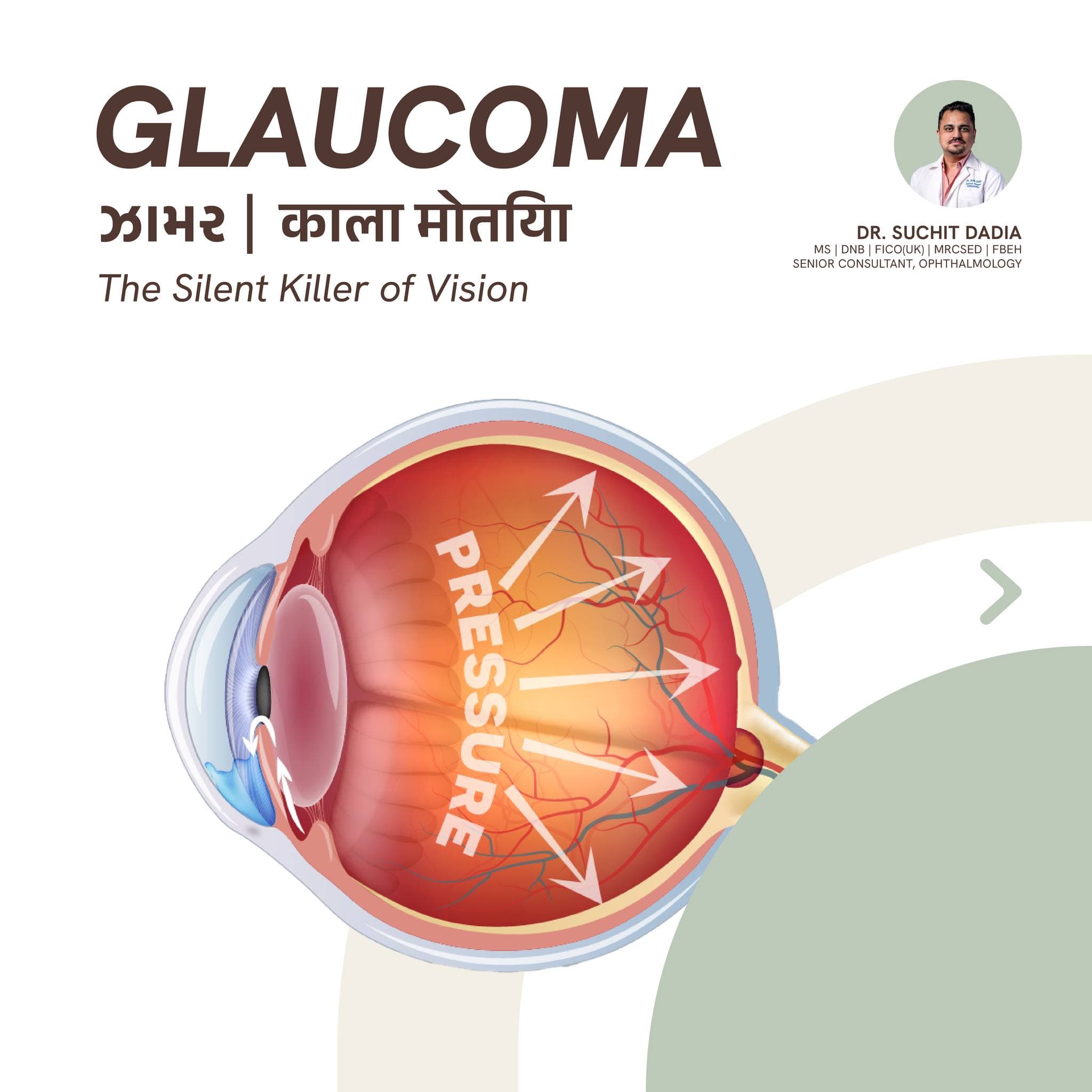
Glaucoma is a group of eye conditions that damage the optic nerve, often caused by increased pressure in the eye. Think of it as high blood pressure for your eyes—it’s quiet, painless, but can slowly steal your vision if not treated in time.It often shows no symptoms in its early stages, yet it can lead to permanent blindness if left undetected. Regular eye check-ups are the key to early detection and effective management.If you're over 40 or have a family history of Glaucoma, get your eyes tested today. Protect your vision before it’s too late!Glaucoma is a group of eye conditions that damage the optic nerve, often caused by increased pressure in the eye. Think of it as high blood pressure for your eyes—it’s quiet, and painless, but can slowly steal your vision if not treated in time.

Dr. Suchit Dadia

Ophthalmologist • 11 yrs • Ahmedabad

77 views

Dr. Suchit Dadia | While Pterygium is generally non-threatening, it cannot be cured with external eye drops. These may relieve symptoms but won’t remove the... | Instagram

Dr. Suchit Dadia | While Pterygium is generally non-threatening, it cannot be cured with external eye drops. These may relieve symptoms but won’t remove the... | Instagram

While Pterygium is generally non-threatening, it cannot be cured with external eye drops. These may relieve symptoms but won’t remove the growth. Surgery is the only effective treatment to prevent complications such as blurred or double vision.If you notice a bump or growth in your eye, consult your eye doctor immediately.Stay tuned for Part 3: How Pterygium Surgery Works.Like and share to spread awareness!...#DrSuchitDadia #ophthalmology #Pterygium #pterygiumsurgery

1 like
Dr. Suchit Dadia

Ophthalmologist • 11 yrs • Ahmedabad

87 views

Recurring eye discharge is not always " JUST AN INFECTION ".

Recurring eye discharge is not always " JUST AN INFECTION ".

Recurring eye discharge is not always " JUST AN INFECTION ". Sometimes it's a blocked tear duct , known as Nasolacrimal Duct Obstruction. The good news !?! It can be cured with a Small Surgery! ONLY EYE DROPS DO NOT WORK.Take every Eye discharge seriously if it's there for a long time , or it happens again and again by pressing near the corner of the eye , as seen in the video.Contact / DM to know more .Wishing you the Best of Eye Health always!#eye #drsuchitdadia #ophthalmology #healthyeyes #drsuchit #eyehealth #eyedischarge #eyediseases #srveyehospital

Dr. Suchit Dadia

Ophthalmologist • 11 yrs • Ahmedabad

58 views

EXPIRY DATE vs SHELF LIFE of eye drops.

EXPIRY DATE vs SHELF LIFE of eye drops.

EXPIRY DATE vs SHELF LIFE of eye drops.( Short video Explanation in Hindi).Your eyes are too precious to gamble with expired products.Using old or contaminated eye drops can silently harm your vision.This reel breaks down expiry vs shelf-life in the simplest way — so you never make the wrong choice again.Watch this reel now and protect your eyes with the right information.#SRVEyeHospital #EyeAwareness #VisionCare #EyeDropSafety #DrSuchitDadia #EyeFacts #ProtectYourSight #DailyEyeCare#InsightEyeCareHospitals

Related Topics

Find a Doctor for Eye & Vision Care

Verified specialists across India

Dr. Suchit Dadia

Ophthalmologist

11 yrs

Ahmedabad

Dr. Suchit Deepak Dadia Clinic
a well-developed residential and commercial area in Ahmedabad, Gujarat, India, Ahmedabad, Gujarat, 380054
₹500 consultation
EmailWhatsApp

Dr. Vikas Mittal

Ophthalmologist

20 yrs

Ambala

LJ Eye Institute
Model Town, Ambala, Haryana, 134003
₹200 consultation

Dr. Lakshmi Kuniyal

Ophthalmologist

13 yrs

Mathura

Aarogyam Health Clinic
Goverdhan, Mathura, Uttar Pradesh, 281004
₹300 consultation

Dr. Sanjay Gupta

Ophthalmologist

17 yrs

Kota

Agrawal Eye And Skin Hospital
VIP Colony, Kota, Rajasthan, 324005
₹300 consultation