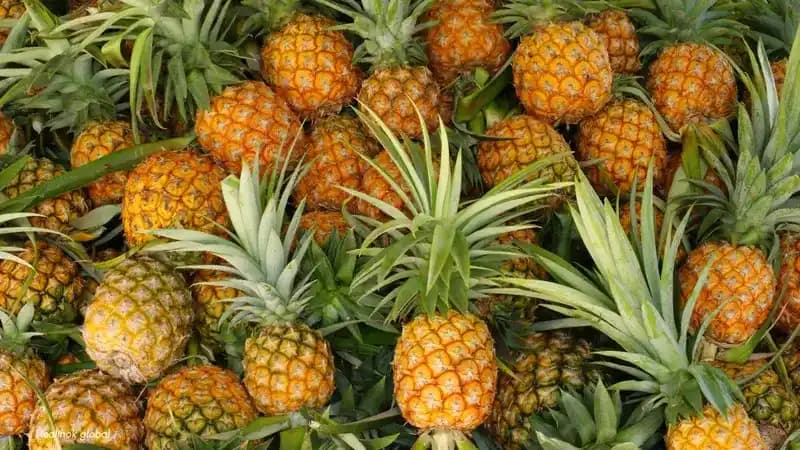
From aiding digestion to boosting immunity, pineapple is a tropical treasure. Explore the top pineapple benefits, calories, juice uses, and pregnancy-related facts.
Frequently Asked Questions
How does bromelain in pineapple actually work — and does it really help with arthritis and joint pain?
Bromelain is a mixture of proteolytic enzymes (cysteine endopeptidases) found in pineapple stem and fruit — it is among the best-studied plant enzymes in clinical medicine. How it works in digestion: bromelain breaks down dietary proteins in the stomach and small intestine, reducing the work required from pepsin and trypsin; this is why pineapple is traditionally eaten after protein-rich meals in many cultures. It eases bloating by reducing undigested protein fermentation in the colon. Bromelain as anti-inflammatory: bromelain inhibits pro-inflammatory cytokines (TNF-α, IL-1β) and reduces prostaglandin synthesis — a mechanism similar to NSAIDs but much weaker. Clinical evidence for arthritis: a 2016 systematic review (BMC Complementary Medicine) of bromelain for osteoarthritis found statistically significant pain reduction and functional improvement vs placebo in knee OA — but effect sizes were modest (comparable to low-dose ibuprofen, not full NSAID dosing). A 2004 RCT (Phytomedicine) found bromelain comparable to diclofenac for knee OA pain at 12 weeks. Important caveat: most arthritis studies used standardised bromelain extracts (200-400mg GDU/day) — NOT from eating fresh pineapple. A 100g serving of fresh pineapple provides approximately 10-40mg GDU of bromelain — much lower than the therapeutic doses in clinical trials. Fresh pineapple is a useful dietary anti-inflammatory contributor as part of a whole-diet approach, but cannot substitute for prescription anti-inflammatories in clinical arthritis management. For digestive benefit: 100-150g of fresh pineapple or 150ml of fresh (not pasteurised) pineapple juice at the end of a meal is practical; bromelain is largely destroyed by pasteurisation — canned/packaged pineapple juice has negligible bromelain activity.
Is pineapple really safe to eat during pregnancy — I've heard it causes miscarriage?
YMYL direct answer: eating fresh pineapple in normal dietary quantities (1-2 slices, 100-150g) is safe during pregnancy and does NOT cause miscarriage. The 'pineapple causes miscarriage' claim originates from the fact that bromelain has uterotonic properties (can stimulate uterine contractions) at very high doses. What the evidence actually shows: the bromelain concentration in fresh pineapple fruit (much lower than in the stem or core) is insufficient to stimulate uterine contractions at dietary amounts; a person would theoretically need to eat 7-10 whole pineapples in one sitting to consume sufficient bromelain for a pharmacologically active uterotonic dose — this is not a realistic dietary scenario; multiple obstetric reviews confirm that fresh pineapple in moderate quantities is safe in all trimesters. What IS contraindicated in pregnancy: bromelain supplements (capsules/tablets, 500-1000mg+ GDU) are NOT recommended during pregnancy — these concentrations can theoretically have uterotonic or teratogenic effects and are commonly listed as contraindicated in pregnancy on European Medicines Agency assessments; pineapple stem extract or core-heavy preparations (sometimes used in supplements) — avoid. What to tell patients: 1-2 slices (100-150g) of fresh pineapple per day is safe in pregnancy and provides useful vitamin C, folate, and fibre; avoid bromelain supplements during pregnancy; avoid drinking pineapple juice in very large quantities (>500ml/day) as an abundance-of-caution measure; any pregnancy dietary concern should be discussed with your obstetrician. Nutritional benefits in pregnancy: folate (B9) — 7% DV per 100g; Vitamin C — 48mg (80% DV for pregnant women); manganese — important for bone development; fibre — helps with pregnancy constipation.
Can diabetics eat pineapple — it seems very sweet and I'm worried about my blood sugar?
This is a valid concern — pineapple has a higher GI than many other fruits, and the article's implication that it is broadly 'good for blood sugar' needs qualification. Pineapple GI: fresh pineapple: GI 59-66 (medium range — at the upper boundary of medium, approaching high); canned pineapple in syrup: GI 65-75 (medium-to-high); pineapple juice: GI 46-60 (varies by preparation — but loses fibre so GL per serving is problematic). For comparison: banana (ripe): GI 62; orange: GI 40-43; apple: GI 36; mango (Totapuri): GI 45-50. Pineapple is higher-GI than most common Indian fruits. Glycaemic Load per 100g fresh pineapple: GL ~7-8 (low-medium — because pineapple has a lower carbohydrate density despite medium-high GI). Safe diabetic consumption: 80-100g (2-3 small chunks) per day is generally manageable for T2D with controlled HbA1c; eat at the end of a meal with protein present — never alone as a standalone snack; fresh pineapple > pineapple juice > canned pineapple (descending safety order); check your own 2-hour postprandial glucose to confirm your personal response. Bromelain and blood sugar: bromelain has shown insulin-sensitising effect in some animal models, but human evidence is insufficient to count this as a meaningful benefit for T2D management — do not rely on pineapple's bromelain to offset its carbohydrate load. Bottom line: pineapple is manageable in small portions for T2D but is NOT a 'blood sugar friendly' fruit compared to lower-GI options like guava (GI 12), apple, or orange. Guava is a significantly better diabetic fruit choice in India.
Is it better to eat whole pineapple or drink pineapple juice — do I get the same bromelain and nutrients from juice?
Whole fresh pineapple and fresh pineapple juice are nutritionally similar, but pasteurised/packaged juice is very different — and bromelain is the key differentiator. Fresh pineapple vs fresh-squeezed juice: calories: 100g pineapple = ~50 kcal; 200ml fresh juice ≈ 100-110 kcal (2x more calories for equivalent volume). Fibre: pineapple = 1.4g per 100g; juice = ~0.2g (almost all fibre removed). Bromelain: fresh pineapple pulp contains active bromelain; fresh-squeezed juice (no heat) retains significant bromelain; the pineapple core has much higher bromelain content than the flesh — blending/juicing the core increases bromelain yield. GI: fresh pineapple GI 59-66; fresh juice GI ~46-60 (lower due to less carbohydrate per ml vs equivalent weight of solid); paradoxically, juice may be slightly lower GI than whole fruit BUT lower satiety and higher total caloric load makes it less favourable overall. Pasteurised / packaged pineapple juice: bromelain is destroyed above 60°C — all pasteurised juice (commercial brands, canned juice) contains essentially zero active bromelain; sugar content: commercial pineapple juice in India often contains added sugar (50-70g per 250ml carton) — equivalent to soft drink in glycaemic impact. Practical guidance: for maximum bromelain benefit: fresh pineapple slices including core, eaten at the end of a meal; for hydration: freshly blended pineapple with water (not strained) retains fibre + bromelain; commercial/packaged pineapple juice: poor substitution for whole fruit — high sugar, zero bromelain, low fibre. If buying packaged juice in India: look for 'no added sugar' and '100% fruit' labels; verify FSSAI registration number. For diabetics: whole fresh pineapple (100g) > fresh juice (150ml) > packaged juice (avoid).
Questions About This Article
Have a question? Ask the author directly.
Have a question about this article?
Ask Zocvi Editorial directly. Your question may help others with similar concerns.


Comments (0)