A KPI Framework for Measuring Patient Recovery in Indian Clinics

A KPI Framework for Measuring Patient Recovery in Indian Clinics

Overview

Vague definitions of recovery lead to inconsistent care. A structured 3-phase KPI framework — define success by condition, capture progress in the EMR, review monthly — that clinics can adopt without adding admin overhead.

Introduction

In most Indian clinics, treatment success is defined informally — the patient reports feeling better, the doctor moves on. Without structured measurement, protocols cannot be refined and outcome gaps stay invisible. A KPI framework fixes this by making recovery a measurable, comparable output rather than a subjective impression.

Why Measuring Recovery Matters

Structured outcome measurement supports four concrete clinic goals:
  • Refine treatment protocols based on what actually works for your patient mix
  • Engage patients with visible progress markers instead of vague reassurance
  • Identify systemic care gaps — missed follow-ups, protocol drift between doctors
  • Build audit-ready documentation for NABH accreditation, insurance panels, and value-based care contracts

A 3-Phase Outcome Measurement Framework

  1. Define "success" by condition. Start with your top 5 conditions — commonly diabetes, hypertension, hypothyroidism, respiratory infections, and post-op recovery. Define specific numeric targets: HbA1c < 7 in 90 days for T2DM, BP < 140/90 sustained over 3 monthly visits for hypertension.
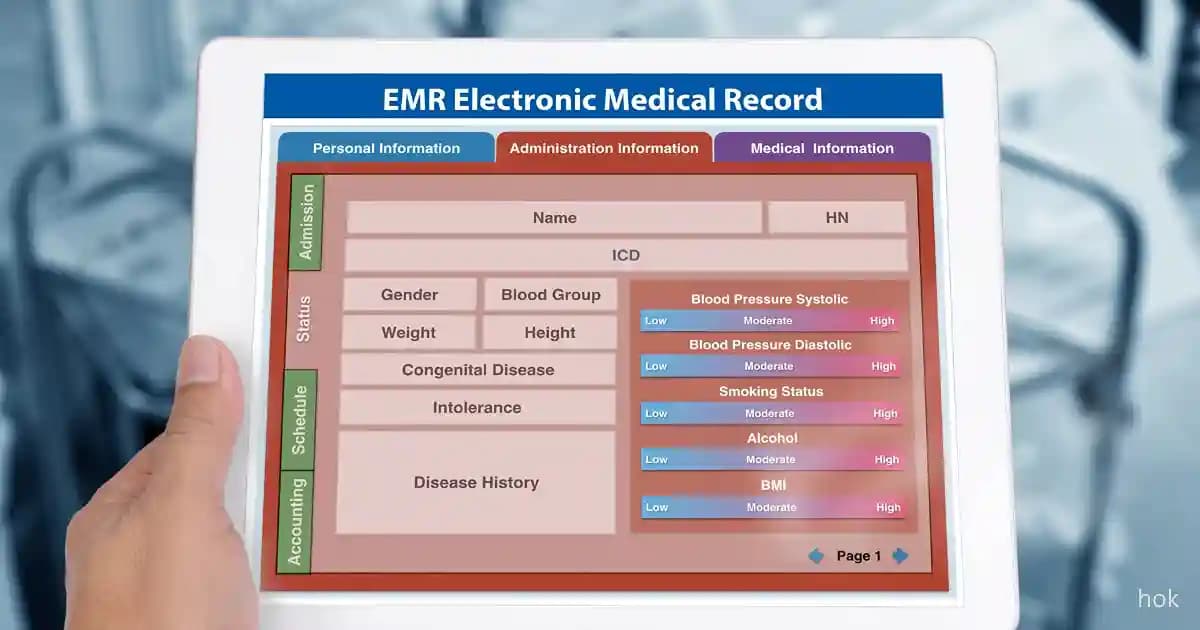
  2. Capture progress at every encounter. Log the KPI at each visit inside the EMR — most modern EMR/PMS systems support custom fields for this. The goal is a few structured fields per visit, not a separate outcome-tracking spreadsheet.
  3. Review and adjust monthly. Host a 30-minute clinical review each month. Use the KPI reports to analyse follow-up delays, doctor-wise variation in adherence, and protocol issues. Adjust the protocol; don't just note the variance.

Benefits for Clinics and Small Hospitals

  • Stronger clinical decision-making backed by longitudinal data instead of memory
  • Patient trust built through transparent progress markers
  • NABH accreditation and insurance-panel audit support
  • Concrete material for CME and internal case reviews
  • Alignment with value-based care and outcome-linked payment models entering Indian healthcare

What to Look for in an EMR or PMS for Outcome Tracking

Not every EMR supports outcome tracking well. When evaluating a system for this workflow, verify:
  • Custom KPI fields per condition, editable without vendor involvement
  • Dashboards that segment by doctor, condition, and time period
  • Protocol-linked follow-up alerts (missed HbA1c retest, missed BP recheck)
  • Exportable reports in audit-friendly formats for NABH or insurance reviews
Verify these in a live demo using your actual top 5 conditions rather than trusting feature checklists.

Conclusion

Recovery measurement matters clinically — it's how protocols get refined and outcomes improve. But it also matters commercially, in a way clinicians tend to under-appreciate: patients who can see their own progress trend (HbA1c improving, BP dropping, symptom score falling) return more reliably, refer more often, and trust the practice more. The dashboard has two audiences: the clinician looking for protocol signal, and the patient looking for visible progress. Both should be able to read it.

About Zocvi

Zocvi connects patients with verified doctors and evidence-based health guidance. Visit zocvi.com or reach us on WhatsApp at +91-92724-57637.


Follow Zocvi

Stay connected with Zocvi for expert health advice. Follow us on Facebook, LinkedIn, and Instagram.

Frequently Asked Questions

Which conditions should I start KPI tracking with?

Start with your 5 highest-volume conditions — usually diabetes, hypertension, hypothyroidism, one respiratory group (asthma or URI), and one post-procedure category. High volume gives you enough data points to see patterns within 3-6 months. Trying to track everything at once dilutes attention and staff usually abandon the workflow within 90 days.

How do I stop KPI logging from adding time to every consultation?

Embed the KPI as a required structured field on the visit template — not as a separate step. For diabetes it's one field (HbA1c value + date). For hypertension it's two (systolic, diastolic). Under 30 seconds per visit if it's part of the EMR flow. If it's a separate spreadsheet or paper form, staff will drop it within a month.

How do I compare outcomes between doctors without creating friction?

Frame the comparison as protocol variation, not doctor performance. Report as 'Protocol A cohort achieved HbA1c &lt; 7 in X% of cases vs Protocol B's Y%' rather than 'Dr X vs Dr Y.' This keeps the review focused on the clinical decision, not the doctor. Doctor-level dashboards can exist but should be private to that doctor for self-review.

What outcome types are meaningful to track beyond lab values?

Four categories work well: numeric clinical markers (HbA1c, BP, weight), protocol adherence (medication refill rate, follow-up attendance), symptom resolution (structured 1-5 scale at each visit), and patient-reported outcomes (functional status, sleep, mood). Pick 1-2 per condition; more than 4 makes the dashboard unreadable.

Is this workflow feasible for a single-doctor clinic?

Yes — solo practices often benefit more, because there's no protocol-variation debate. The KPI review becomes a self-audit tool. Start with 1 condition and 1 KPI (e.g., HbA1c for diabetes), run it for 90 days, then add the next. This staged approach avoids the burnout that kills most solo-practice quality initiatives.

Questions About This Article

Have a question? Ask the author directly.

Have a question about this article?

Ask Zocvi Editorial directly. Your question may help others with similar concerns.

Q:1 answer
Q:1 answer
Q:1 answer
Q:1 answer
Q:1 answer

Comments (0)

Found this helpful? Share it!

LinkedInWhatsApp

More from Zocvi Editorial

Other Articles You May Like

Related Topics

Find a Doctor for Operational Efficiency

Verified specialists across India

Dr. Saloni Kabra

Homoeopath

7 yrs

Indore

Homeopathic Hooman Clinic
Chhatribag, Near Shri Devi Ahilya Shishu Vihar School, Indore, Madhya Pradesh, 452002
₹800 consultation
EmailWhatsApp

Dr. Prashant Jain

Ayurvedic Doctor

12 yrs

Delhi

Nirmal Ayurved
Shahdara – Jyoti Nagar West, Delhi, Delhi, 110094
Fee on request
EmailWhatsApp

Dr. Ambuj Arora

Dentist

12 yrs

Muzaffarnagar

12, Dr Suresh Medical Complex, Bhagat Singh Road, Muzaffarnagar
Nabab Ganj, Muzaffarnagar, Uttar Pradesh, 251002
₹250 consultation

Dr. Rajan Bhargava

ENT Specialist

30 yrs

Kanpur

Dr. Rajan Bhargava Clinic
Brahm Nagar, Kanpur, Uttar Pradesh, 208012
₹700 consultation