Life Cycle of Malaria Parasite: Key Stages Explained

Life Cycle of Malaria Parasite: Key Stages Explained

Overview

The malaria parasite undergoes a complex life cycle involving both human and mosquito hosts.

Introduction

The malaria parasite undergoes a complex life cycle involving both human and mosquito hosts. Understanding the key stages of the malaria parasite's life cycle is essential for developing effective strategies to control and prevent malaria. This guide explores the key stages of the malaria parasite's life cycle, detailing the processes that occur in both the human and mosquito hosts and highlighting their implications for disease transmission and control.

Human Liver Stage

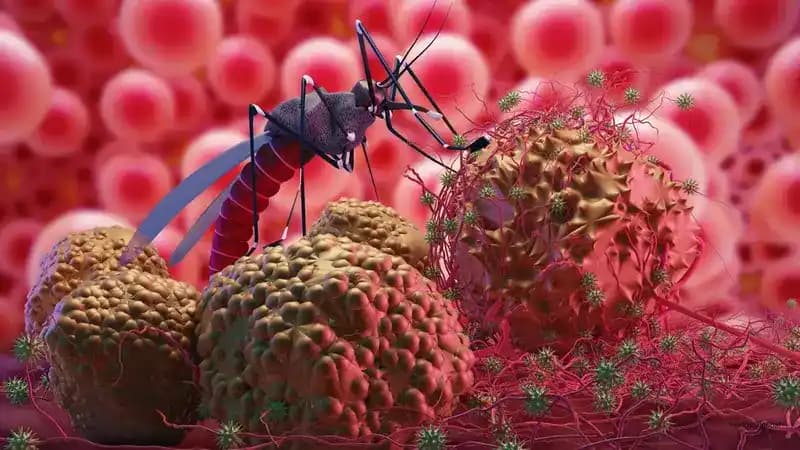
The life cycle of the malaria parasite begins when an infected female Anopheles mosquito bites a human, injecting sporozoites into the bloodstream. The sporozoites travel to the liver, where they invade hepatocytes (liver cells) and undergo asexual reproduction. This stage can last from a few days to several weeks, depending on the Plasmodium species. In the liver, the sporozoites mature into schizonts, which eventually rupture and release merozoites into the bloodstream.

Human Blood Stage

Once in the bloodstream, the merozoites invade red blood cells (RBCs) and undergo asexual reproduction. This stage involves several key processes:
The merozoite transforms into a ring-shaped trophozoite inside the RBC. The trophozoite feeds on the hemoglobin within the RBC.

1. Ring Stage

The trophozoite matures and enlarges, eventually developing into a schizont containing multiple merozoites.

2. Trophozoite Stage

The schizont ruptures, releasing merozoites into the bloodstream to infect new RBCs. This cycle repeats, causing the characteristic symptoms of malaria such as fever and chills.

3. Schizont Stage

Some merozoites develop into sexual forms called gametocytes, which circulate in the bloodstream and are taken up by a mosquito during a blood meal.

4. Gametocyte Stage

Mosquito Stage

In the mosquito's gut, the gametocytes mature into male and female gametes, which fuse to form zygotes. The zygotes develop into ookinetes, which penetrate the gut wall and form oocysts. Inside the oocysts, sporozoites develop and eventually migrate to the mosquito's salivary glands, ready to infect a new human host during the next blood meal.
Gametocytes taken up by the mosquito mature into gametes in the mosquito's gut.

1. Gametocyte Development

Male and female gametes fuse to form zygotes, which develop into ookinetes.

2. Zygote Formation

Ookinetes penetrate the gut wall and form oocysts, where sporozoites develop.

3. Oocyst Development

Sporozoites migrate to the mosquito's salivary glands, ready to infect a new human host.

4. Sporozoite Migration

Implications for Disease Transmission

The complex life cycle of the malaria parasite has significant implications for disease transmission and control. Key points include:
The transmission of malaria depends on the interaction between infected humans and Anopheles mosquitoes. Effective control measures must target both hosts.

1. Human-Mosquito Interaction

Controlling the mosquito population through measures such as insecticide-treated bed nets (ITNs), indoor residual spraying (IRS), and environmental management is crucial for reducing malaria transmission.

2. Vector Control

The emergence of drug-resistant strains of Plasmodium poses a challenge to malaria control. Ongoing research and development of new antimalarial drugs are essential.

3. Drug Resistance

Efforts to develop effective malaria vaccines are ongoing. Understanding the parasite's life cycle is crucial for identifying potential vaccine targets.

4. Vaccine Development

Strategies for Malaria Control

Effective malaria control requires a multifaceted approach, including:
Prompt diagnosis and treatment of malaria cases reduce the severity of the disease and prevent further transmission.

1. Early Diagnosis and Treatment

Using personal protective measures such as ITNs, repellents, and appropriate clothing helps reduce the risk of mosquito bites.

2. Preventive Measures

Community-based interventions, education, and awareness campaigns play a crucial role in malaria prevention and control.

3. Public Health Initiatives

Ongoing research into new treatments, vaccines, and vector control methods is essential for advancing malaria control efforts.

4. Research and Innovation

Conclusion

Understanding the life cycle of the malaria parasite is fundamental for developing effective strategies to control and prevent malaria. By targeting both the human and mosquito hosts and addressing the various stages of the parasite's life cycle, we can reduce the transmission and impact of this deadly disease. Continued research, innovation, and public health efforts are essential for achieving global malaria control and eventual eradication.

About Zocvi

Zocvi connects patients with verified doctors and evidence-based health guidance. Visit zocvi.com or reach us on WhatsApp at +91-92724-57637.


Follow Zocvi

Stay connected with Zocvi for expert health advice. Follow us on Facebook, LinkedIn, and Instagram.

Frequently Asked Questions

Why does malaria cause fever that comes and goes in cycles every 48 or 72 hours?

The cyclical fever pattern — classically every 48 hours in P. vivax and P. ovale (tertian fever), or every 72 hours in P. malariae (quartan fever) — is a direct consequence of the blood-stage replication cycle of the parasite. Inside a red blood cell, the malaria parasite (merozoite) matures from ring stage to trophozoite to schizont over a fixed time span specific to the species. When the schizont is fully formed, the red blood cell ruptures, releasing 8–32 new merozoites along with parasite waste products including hemozoin (malaria pigment) and parasite proteins into the bloodstream. It is this sudden mass release — happening simultaneously across millions of infected red cells that started the cycle at the same time — that triggers the immune system to release a surge of inflammatory cytokines (TNF-α, IL-1, IL-6), causing the fever spike, rigors, and sweating. Once the cytokine wave subsides and the newly released merozoites have infected fresh red cells and begun their next cycle, the patient feels temporarily better. P. falciparum is more dangerous partly because its cycle is less synchronised, producing more continuous fever and higher parasite loads. Fever that doesn't fit the classic 48/72-hour pattern doesn't rule out malaria — many P. falciparum infections produce daily or irregular fever.

What happens in the liver stage of malaria, and why does P. vivax keep coming back months later?

After an infected Anopheles mosquito bites you, sporozoites injected into the skin enter the bloodstream and reach the liver within 30–60 minutes. Inside hepatocytes (liver cells), each sporozoite undergoes asexual multiplication — a process called exoerythrocytic schizogony — producing thousands of merozoites in a single liver schizont. This liver stage lasts 7–10 days for P. falciparum, and slightly longer (up to 2 weeks) for P. vivax. The merozoites burst out of the liver into the bloodstream and begin infecting red blood cells — this is when blood-stage symptoms begin. The reason P. vivax and P. ovale cause relapses months or even years after the original infection is the hypnozoite — a dormant form of the parasite that remains in the liver cells after the initial infection and does not immediately replicate. Hypnozoites can reactivate weeks to years later (often triggered by immune suppression, stress, or fever from another illness), causing a new blood-stage infection and fresh symptoms despite no new mosquito bite. Primaquine (or tafenoquine) are the only drugs that kill hypnozoites and are essential to prevent P. vivax relapse; however, they can cause haemolysis in G6PD-deficient patients, so G6PD testing is required before prescribing.

How does understanding the malaria life cycle explain why treatment must target specific stages?

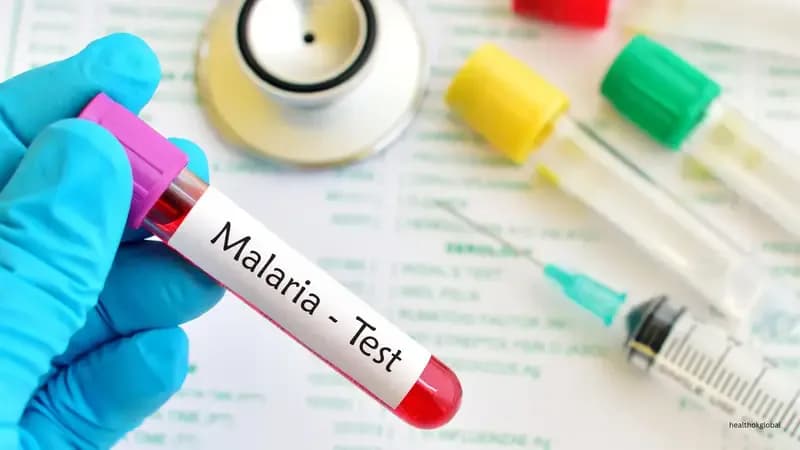
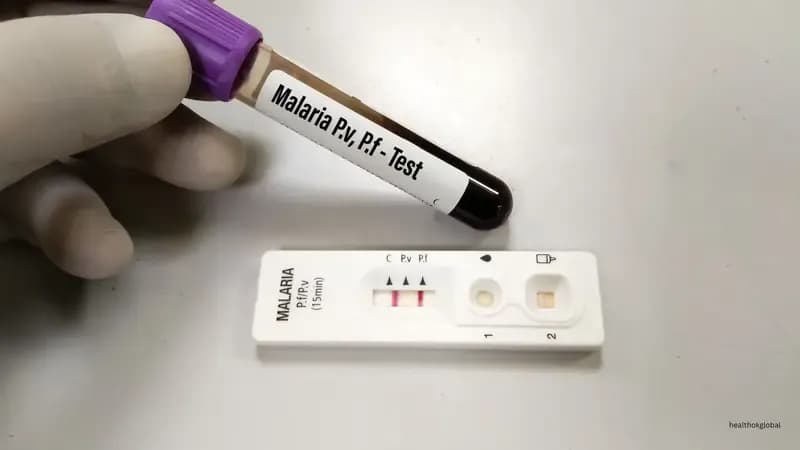
No single drug kills the malaria parasite at every stage of its life cycle — effective treatment requires targeting the right stage at the right time. Artemisinin-based combination therapies (ACTs) — the current first-line treatment for uncomplicated malaria — work primarily on the blood stage; they rapidly kill ring-stage and trophozoite-stage parasites across all four Plasmodium species, clearing fever within 24–48 hours. Primaquine has a different role: it targets liver hypnozoites (preventing P. vivax/P. ovale relapse) and kills mature gametocytes in the bloodstream, reducing transmission from treated patients to mosquitoes. This is why WHO recommends adding a single low dose of primaquine to ACT therapy even for P. falciparum, to reduce gametocyte carriage and curb transmission in communities. Chloroquine is now largely ineffective against P. falciparum due to widespread resistance but remains useful for P. vivax in areas without chloroquine-resistant vivax. The emergence of artemisinin partial resistance in Southeast Asia is a serious concern because it affects the ring stage specifically — parasites survive the initial artemisinin exposure and must be cleared by the partner drug (piperaquine, lumefantrine, etc.). Understanding the lifecycle also explains why blood-smear thick films, rapid diagnostic tests (RDTs), and PCR all detect different things — the thick film and RDTs detect blood-stage parasites and antigens, while PCR can detect very low-level parasitaemia at any stage.

Why does killing gametocytes matter, and how does that affect malaria prevention in a community?

Gametocytes are the sexual stage of the malaria parasite — the forms that circulate in human blood and are picked up by female Anopheles mosquitoes during a blood meal. They are clinically silent: gametocytes do not cause fever or any symptoms in the human host. However, they are the only form that can continue the life cycle inside the mosquito — and therefore the only form capable of perpetuating transmission. After an infected blood meal, male and female gametocytes fuse in the mosquito's midgut to form a zygote, which develops into an ookinete, then an oocyst, and finally thousands of sporozoites that migrate to the mosquito's salivary glands ready to infect the next human bite. This mosquito-stage development takes approximately 10–21 days depending on ambient temperature — this is called the extrinsic incubation period. A patient who has been treated with ACT and has cleared blood-stage parasites (and therefore feels well) may still carry gametocytes for 1–3 weeks, remaining infectious to mosquitoes. This is why gametocyte-clearing drugs (primaquine, ivermectin in research settings) are important beyond individual treatment: they are transmission-blocking interventions that protect the community, not just the patient. In India's monsoon season, when Anopheles mosquito density peaks, gametocyte carriage in partially treated or untreated patients is the main driver of malaria outbreaks.

Questions About This Article

Have a question? Ask the author directly.

Have a question about this article?

Ask Zocvi Editorial directly. Your question may help others with similar concerns.

Q:1 answer
Q:1 answer
Q:1 answer
Q:1 answer

Comments (0)

Found this helpful? Share it!

LinkedInWhatsApp

More from Zocvi Editorial

Other Articles You May Like

Find a Doctor for Vector-Borne Diseases

Verified specialists across India

Dr. Agarwal Dr S S

General Physician

26 yrs

Jaipur

Bhandari Hospital
Ganpati Nagar, Jaipur, Rajasthan, 302003
₹400 consultation

Dr. Gyaneshwar

General Physician

Dehradun

Family Clinic, Rajhans Plaza
Kulhan, Dehradun, Uttarakhand, 248013
Fee on request

Dr. Sushma Jadhav

Book Online

General Physician

22 yrs

Pune

SarvAadi Health and Geriatic Clinic
Laxman Nagar, Baner, Pune, Pune, Maharashtra, 411045
₹500 consultation
EmailWhatsApp

Dr. Sonal Jain

General Physician

16 yrs

Hyderabad

Dr. Sonal's Health Care Centre
Devi Laxmi Bagh, Hyderabad, Telangana, 500029
₹600 consultation