Are 'Medicated' Beauty Products Really Trustworthy

Many beauty products use terms like 'medicated' or 'clinical,' but what do they actually mean? Understand the difference between cosmetics and drugs to make informed purchasing decisions.

Skin infections are among the most common conditions presenting to doctors and chemists in India. The combination of tropical heat, humidity, sweating, crowded living conditions, and widespread use of unsupervised antibiotics and antifungals creates a perfect environment for bacterial, fungal, viral, and parasitic skin infections — and for drug resistance to develop. Fungal infections (tinea) are reaching epidemic proportions in India due to the widespread use of inappropriate topical steroid-antifungal combination creams that suppress surface inflammation while allowing the fungus to go deeper and become resistant. Scabies, caused by a mite that burrows into the skin, spreads rapidly in household and institutional settings. Cellulitis and impetigo are common bacterial skin infections. This hub helps you identify the infection type, seek the right treatment, and avoid the self-treatment errors that turn simple infections into resistant ones.
Last reviewed: 11 August 2026
Many beauty products use terms like 'medicated' or 'clinical,' but what do they actually mean? Understand the difference between cosmetics and drugs to make informed purchasing decisions.
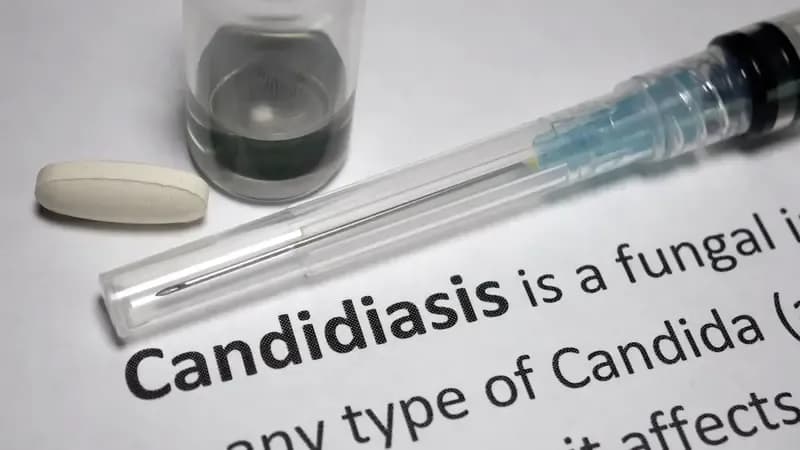
Mucocutaneous candidiasis is a fungal infection that affects the skin, nails, and mucous membranes, caused by the Candida species of fungi.

Leprosy, also known as Hansen's disease, is a chronic infectious disease caused by Mycobacterium leprae.

Two classification systems clinicians use for leprosy: WHO's simple paucibacillary vs multibacillary split (used for treatment decisions) and the more detailed Ridley-Jopling five-type system (used for prognosis and research). Here is what each type looks like clinically and why classification matters.
Expert answers from our medical team
Fungal skin infections (tinea/ringworm) typically have characteristic features: a ring-shaped or circular rash with a scaly, raised, advancing edge and a clearer centre; it expands outward over days to weeks. Common locations: the body (tinea corporis), groin (tinea cruris — itchy inner thigh rash), scalp (tinea capitis — scaly patches with hair loss in children), feet (tinea pedis — between the toes, peeling and maceration). Tinea versicolor causes pale or dark patches on the chest, back, and upper arms — distinct scaly spots that don't tan. Bacterial infections (impetigo, cellulitis) have different patterns: impetigo causes honey-crusted sores; cellulitis causes warm, red, spreading skin with fever. Eczema and psoriasis have their own patterns. If in doubt, a dermatologist can do a skin scraping for KOH microscopy — a quick, inexpensive test that confirms fungal infection.
India is experiencing an epidemic of drug-resistant tinea — fungal skin infections that fail standard 2-4 week antifungal courses. The cause: widespread, prolonged use of topical steroid-antifungal combination creams (clotrimazole + betamethasone, available OTC as Quadriderm, Candid-B, and many generics). The steroid suppresses surface inflammation and redness, making the rash look like it's improving — but the underlying fungus is not cleared and continues to proliferate in deeper tissue. When used for months instead of days, it drives the development of terbinafine-resistant strains of Trichophyton indotineae — now spreading across India. Treatment of resistant cases requires systemic antifungals (oral itraconazole or voriconazole) for extended courses, under dermatologist supervision. The solution: never use steroid-antifungal combination creams for ringworm; use pure antifungal creams for the correct duration.
Scabies is caused by the mite Sarcoptes scabiei, which burrows into the top layer of skin to lay eggs. It causes intense itching — worse at night — and a characteristic rash: tiny linear burrows (visible on wrists, web spaces between fingers, genitals, armpits), along with a generalised itchy rash from immune sensitisation. It is highly contagious through prolonged skin-to-skin contact (less so from surfaces). Treatment: permethrin 5% cream applied from neck to toes (including under nails, between toes, skin folds) for 8-12 hours, washed off, repeated after 1 week. CRITICALLY — all household and close contacts must be treated simultaneously on the same night, even if they have no symptoms. Wash all clothing, bed linen, and towels in hot water. Failure to treat all contacts simultaneously causes re-infestation. Oral ivermectin is an alternative for crusted (Norwegian) scabies or when topical treatment is impractical.
Most skin infections are not emergencies but some need urgent or emergency medical attention. Cellulitis with systemic signs — spreading redness with fever, chills, and pain — needs antibiotics that day, intravenously if rapidly spreading or in a high-risk patient (diabetic, immunosuppressed). Necrotising fasciitis (a deep, rapidly spreading bacterial infection of the fascia) is a surgical emergency — characterised by pain disproportionate to the skin appearance, skin that feels unusually hard or woody, and rapid spread. It requires emergency surgical debridement and intensive IV antibiotics; mortality is high without prompt surgery. Signs that a skin infection is worsening despite antibiotics — increased spreading, increased pain, fever despite treatment — need urgent re-evaluation. Any skin infection in a diabetic patient warrants early medical attention as these can progress rapidly due to impaired immunity and poor circulation.
Complete the full course of antifungal treatment even after the rash has visibly cleared — the fungus survives in the outer skin layers beyond visible signs. Standard topical antifungal creams (clotrimazole, miconazole, terbinafine) applied twice daily for 4-6 weeks for tinea corporis; terbinafine cream is more effective and requires a shorter course (1-2 weeks for athlete's foot). For tinea capitis (scalp): topical treatment is inadequate — oral antifungal (griseofulvin or terbinafine) for 6-12 weeks is required. For recurrent tinea: keep affected areas dry (moisture promotes fungal growth), use antifungal powder in skin folds, change socks daily, don't share towels or footwear, launder clothing at 60°C or higher. If tinea recurs repeatedly despite correct treatment, consider whether you have a source of re-infection (family member with untreated tinea, contaminated footwear) or an underlying immune deficiency (diabetes is a major predisposing factor for recurrent fungal infections).
Questions from our community members
Ask our medical community. Your question may help others with similar concerns.
Verified specialists across India