
Understanding Myopia (Testing)- Dr. Suchit Dadia
Myopia (nearsightedness) is a common condition that’s usually diagnosed before age 20. It affects your distance vision.
1 comment

Glaucoma is the leading cause of irreversible blindness worldwide — and India bears a disproportionately large share of this burden, with an estimated 12 million people affected. The tragedy of glaucoma is its silence: the most common form (open-angle glaucoma) destroys the optic nerve gradually over years, with no pain, no redness, and no vision change until peripheral vision is significantly lost. By the time a patient notices something is wrong, up to 40% of optic nerve fibres may already be permanently destroyed. Glaucoma is detected by measuring intraocular pressure, examining the optic disc, and testing visual fields — a set of tests that takes 30 minutes at an ophthalmologist's clinic. Once detected, progression to blindness is largely preventable with consistent treatment.
Last reviewed: 10 August 2026
Myopia (nearsightedness) is a common condition that’s usually diagnosed before age 20. It affects your distance vision.

Ever wonder what -2.5 or +1.75 really means on your glasses prescription? 🤓 It’s not Greek — it’s Eye Science! 👁️ Here’s a quick breakdown to help you decode your prescription like a pro. 🎥 Watch,...
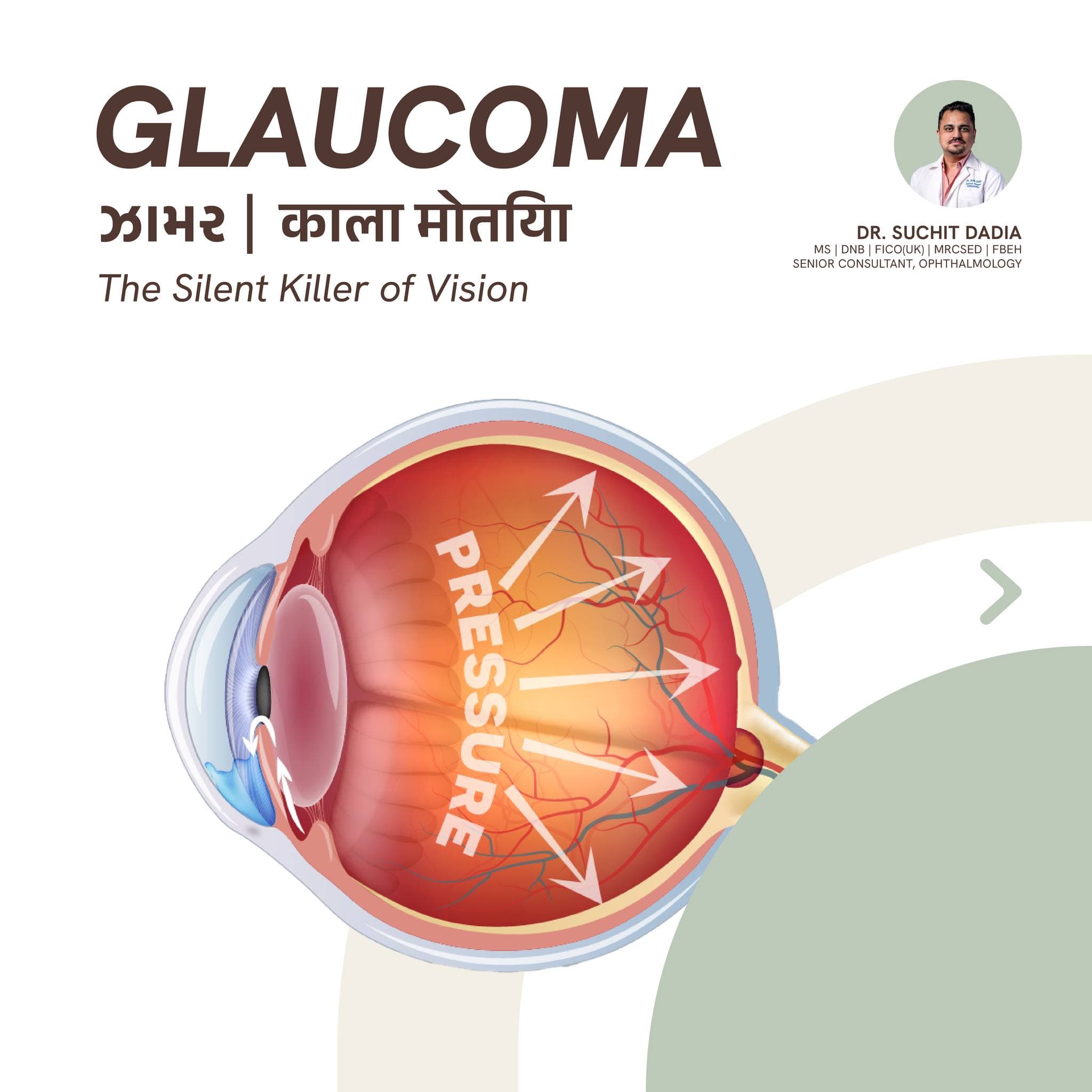
Glaucoma is a group of eye conditions that damage the optic nerve, often caused by increased pressure in the eye. Think of it as high blood pressure for your eyes—it’s quiet, painless, but can slowly steal your vision if not treated in time.It often shows no symptoms in its early stages, yet it can lead to permanent blindness if left undetected. Regular eye check-ups are the key to early detection and effective management.If you're over 40 or have a family history of Glaucoma, get your eyes tested today. Protect your vision before it’s too late!Glaucoma is a group of eye conditions that damage the optic nerve, often caused by increased pressure in the eye. Think of it as high blood pressure for your eyes—it’s quiet, and painless, but can slowly steal your vision if not treated in time.
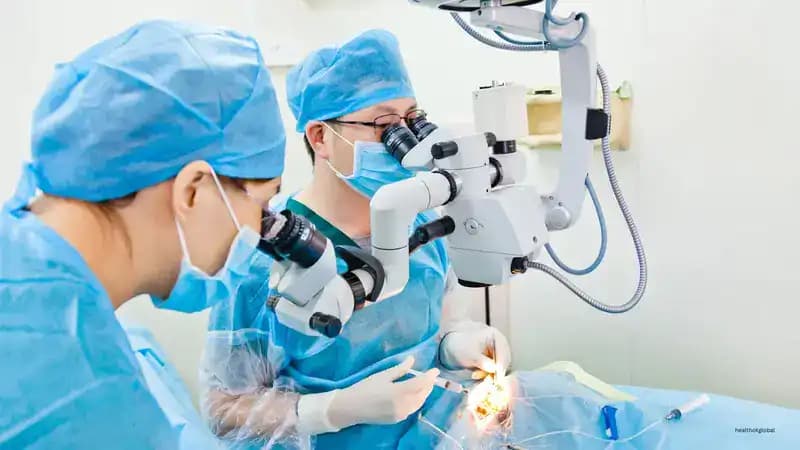
Eye surgery encompasses a range of procedures aimed at correcting vision problems, treating eye diseases, and improving overall eye health.
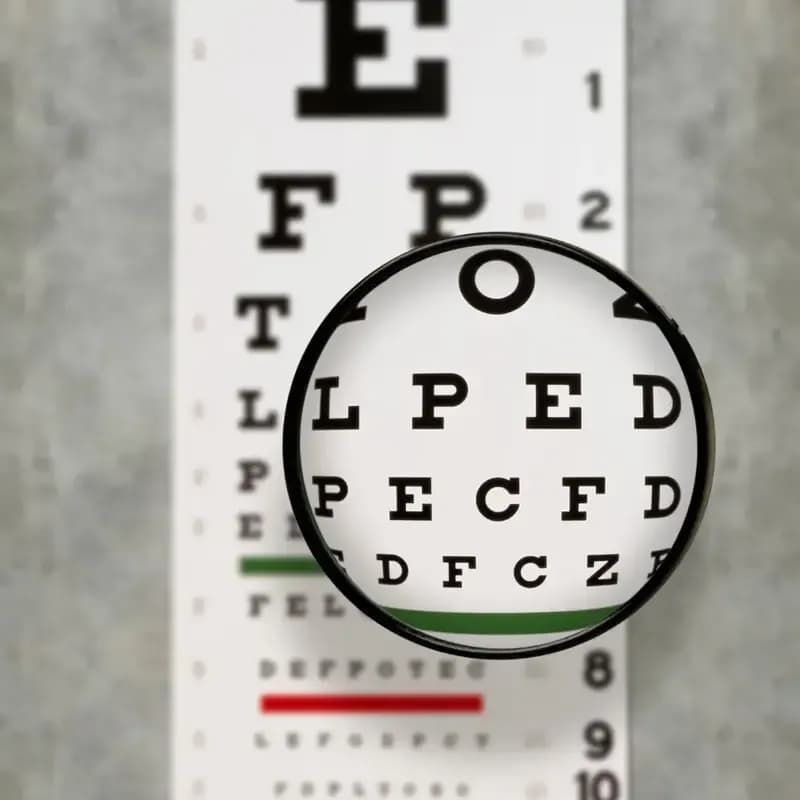
Are you struggling with high eye number and seeking ways to enhance your vision?
Verified specialists across India
Yes — normal tension glaucoma (NTG) is a recognised form where optic nerve damage occurs despite intraocular pressure within the statistically 'normal' range (under 21 mmHg). It is particularly common in people of East and South Asian ancestry. This means high intraocular pressure alone is neither necessary nor sufficient for glaucoma — diagnosis requires examining the optic nerve and testing visual fields, not just measuring pressure. Equally, many people have elevated pressure without glaucoma (ocular hypertension) — they need monitoring but not necessarily treatment unless other risk factors are present. Glaucoma is diagnosed by optic nerve damage and corresponding visual field loss, with IOP being one contributing factor.
Pressure-lowering eye drops are the most common first-line treatment. Prostaglandin analogues (latanoprost, bimatoprost, travoprost) — used once nightly — are most effective and well tolerated; they can cause darkening of the iris and eyelash growth as side effects. Beta-blockers (timolol) reduce fluid production; contraindicated in asthma and heart block. Alpha-agonists (brimonidine) and carbonic anhydrase inhibitors (dorzolamide, brinzolamide) are used as additions. Glaucoma eye drops are a lifelong treatment — stopping them allows pressure to rise and damage to resume. Consistent use is the most important factor in preventing blindness. Missing doses even occasionally over years adds up to cumulative damage. Combination drops (two medications in one bottle) improve adherence for patients on multiple drops.
Selective laser trabeculoplasty (SLT) uses a laser to improve drainage of fluid from the eye, lowering pressure. It is increasingly used as a first-line treatment before or instead of eye drops — a single 5-10 minute outpatient procedure can lower pressure comparably to drops and can be repeated. It is not effective for all glaucoma types and may lose effectiveness over time. Laser peripheral iridotomy (LPI) is used for narrow-angle glaucoma and angle-closure prevention — it creates a small hole in the iris to improve fluid circulation, preventing acute angle-closure attacks. Both procedures are done in clinic, usually with minimal discomfort and no recovery time. They don't replace monitoring — glaucoma requires lifelong follow-up regardless of treatment.
Surgery is recommended when eye drops and laser treatment fail to adequately control intraocular pressure, and the optic nerve continues deteriorating. Trabeculectomy — the most established glaucoma surgery — creates a drainage channel under the conjunctiva (bleb) to allow fluid to escape, significantly lowering pressure. Minimally invasive glaucoma surgeries (MIGS — iStent, Hydrus, OMNI) offer a gentler pressure reduction with faster recovery, often done simultaneously with cataract surgery. Glaucoma drainage devices (Ahmed or Baerveldt tubes) are used in more complex or refractory cases. None of these procedures restore lost vision — they halt or slow further loss. Surgery carries risks (infection, hypotony, cataract development) and is reserved for inadequately controlled disease, not as a first step.
First-degree relatives of glaucoma patients have approximately 10 times the general population risk of developing glaucoma — making family history one of the strongest risk factors. If a parent or sibling has glaucoma, you should have a full eye examination including optic nerve assessment and visual field testing starting from age 40 (or earlier if your ophthalmologist advises based on your specific family history). The examination should be repeated every 1-2 years. If elevated pressure or suspicious optic nerve appearance is found, more frequent monitoring or preventive treatment with pressure-lowering drops reduces the risk of progressing to glaucoma. Early detection in a high-risk person, before any nerve damage occurs, is the ideal outcome of glaucoma screening.
Ask our medical community. Your question may help others with similar concerns.
No questions yet. Be the first to ask!