
Overview
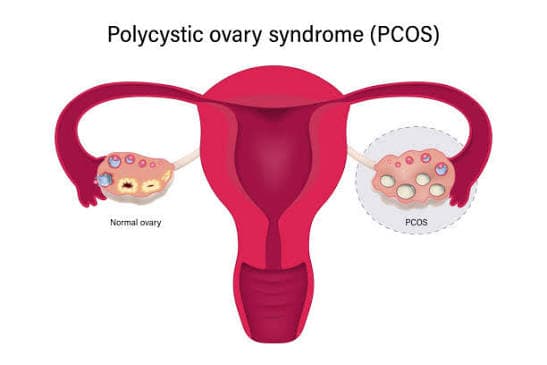
Polycystic ovary syndrome, commonly called PCOS, is a hormonal condition that can affect several aspects of health—not just the ovaries.
It is associated with problems such as irregular ovulation, increased androgen activity and metabolic abnormalities. PCOS can affect menstrual cycles, fertility, skin, hair and metabolic health.
Despite its name, PCOS does not simply mean “cysts on the ovaries.”
The term can be misleading because some women with PCOS do not have polycystic-appearing ovaries on ultrasound, while ovarian follicles can also be seen in people who do not have PCOS.
So, an ultrasound alone should not be used to diagnose or rule out PCOS.
What Are the Common Symptoms of PCOS?
PCOS can look different from one woman to another. You may have several symptoms, only one or two, or sometimes no obvious symptoms.
1. Irregular Periods
One of the most common signs is an irregular menstrual cycle.
Periods may:
- Come less frequently than expected
- Be absent for several months
- Become unpredictable
- Sometimes be unusually heavy
Irregular periods can occur for many reasons, however, so they do not automatically mean you have PCOS. Pregnancy, thyroid disorders, significant weight changes, stress and other hormonal conditions can also affect menstrual cycles.
2. Excess Facial or Body Hair
Higher androgen activity can cause hirsutism, meaning excessive coarse hair growth in areas such as the face, chest or abdomen.
Some women may notice new or increasing facial hair around the chin, upper lip or jawline.
3. Acne and Oily Skin
PCOS may be associated with increased androgen activity, which can contribute to:
- Persistent acne
- Severe acne
- Oily skin
- Acne that continues beyond adolescence
However, acne alone is not enough to diagnose PCOS.
4. Hair Thinning or Hair Loss
Some women experience thinning of scalp hair, particularly around the crown or parting.
This can resemble male-pattern hair loss and may be associated with increased androgen activity.
5. Difficulty Getting Pregnant
PCOS can interfere with regular ovulation.
If ovulation does not occur consistently, conceiving can become more difficult. However, having PCOS does not mean you cannot become pregnant.
Many women with PCOS conceive naturally or with appropriate medical treatment.
CTA: If irregular periods, acne, unwanted facial hair or difficulty conceiving are affecting your life, don't try to connect the symptoms yourself. A gynecologist can assess whether PCOS or another condition may be responsible.
Does Everyone With PCOS Have Ovarian Cysts?
No.
This is one of the most important misconceptions about PCOS.
The ovaries may have a polycystic appearance on ultrasound in some people with PCOS, but the presence of ovarian cysts is not required for a diagnosis.
In fact, the 2023 international evidence-based guideline uses a combination of features rather than requiring ovarian cysts in every patient.
Also, the small structures seen on an ultrasound in PCOS are generally follicles, not necessarily the same thing as pathological ovarian cysts.
How Is PCOS Diagnosed?
There is no single blood test that can confirm PCOS in every woman.
Diagnosis usually involves reviewing your:
- Menstrual history
- Symptoms
- Medical and family history
- Physical examination
- Hormone levels
- Metabolic health
Doctors may also use ultrasound when appropriate.
The internationally accepted diagnostic framework generally considers combinations of:
- Ovulatory dysfunction — such as irregular or absent ovulation/periods.
- Clinical or biochemical hyperandrogenism — such as excess facial/body hair or elevated androgen levels.
- Polycystic ovarian morphology on ultrasound, or other accepted ovarian criteria depending on the individual's age and circumstances.
Other possible causes of similar symptoms need to be excluded before making the diagnosis.
What tests might be involved?
Depending on your symptoms, a doctor may recommend blood tests to evaluate hormones and other conditions that can cause menstrual irregularity.
Metabolic assessment may also be appropriate because PCOS is associated with increased risk of insulin resistance, type 2 diabetes and cardiovascular risk factors.
An ultrasound may be used when clinically appropriate.
Important: There is no single “PCOS test,” and a normal ultrasound does not necessarily mean you cannot have PCOS.
Is an AMH Test Enough to Diagnose PCOS?
No.
Anti-Müllerian hormone (AMH) has received attention in discussions around PCOS because levels may be higher in many women with PCOS.
However, AMH should not be treated as a stand-alone diagnostic test.
ACOG notes that serum AMH is not currently part of the accepted diagnostic criteria for PCOS.
If you have been offered an “AMH test for PCOS,” discuss what the test can and cannot tell you with your healthcare professional.
PCOS and Weight: An Important Misconception
PCOS is often associated with overweight or obesity, but not every woman with PCOS is overweight.
Women at different body weights can develop PCOS.
This matters because focusing only on weight can cause symptoms to be overlooked in women who do not fit the stereotype.
For women who are overweight, lifestyle changes and modest weight loss may improve some metabolic and reproductive outcomes, but PCOS management should be individualized rather than reduced to “just lose weight.”
Can PCOS Affect Fertility?
Yes, but PCOS does not mean infertility.
Irregular ovulation is one of the reasons PCOS can make conception more difficult.
Treatment depends on whether pregnancy is currently desired.
If you are trying to conceive, your doctor can assess ovulation and discuss evidence-based fertility treatments where appropriate.
If pregnancy is not currently a goal, treatment can instead focus on menstrual regulation, androgen-related symptoms and long-term health.
CTA: Trying to conceive with irregular periods? Don't assume PCOS means pregnancy isn't possible. Schedule a fertility or gynecology consultation to understand whether you are ovulating regularly and what options are available.
PCOS Can Affect More Than Reproductive Health
PCOS is not only a fertility or period problem.
It can be associated with an increased risk of:
- Insulin resistance
- Type 2 diabetes
- Abnormal cholesterol levels
- Cardiovascular risk factors
- Endometrial hyperplasia
- Endometrial cancer
- Sleep disorders such as sleep apnea
- Depression and other mental health concerns
The level of risk varies between individuals, and having PCOS does not mean that you will develop these conditions. It does mean that appropriate long-term health monitoring can be important.
Can PCOS Be Cured?
There is currently no single cure for PCOS, but the condition can be managed.
Treatment depends on your symptoms, overall health and whether you are trying to become pregnant.
Depending on the individual, management may include:
- Lifestyle and nutrition changes
- Physical activity
- Treatment to regulate menstrual cycles
- Treatment for acne or excess hair
- Management of metabolic risk factors
- Fertility treatment when pregnancy is desired
Combined hormonal contraceptives may be used in appropriate patients to regulate bleeding and help with symptoms such as acne and excess hair growth.
The right treatment should be decided with a healthcare professional rather than based on social-media “PCOS cures” or supplement claims.
When Should You See a Doctor?
Consider speaking with a healthcare professional if you have:
- Persistently irregular periods
- Long gaps between periods
- New or increasing facial/body hair
- Persistent or severe acne
- Unexplained scalp hair thinning
- Difficulty becoming pregnant
- Symptoms suggestive of insulin resistance
- Significant or unexplained changes in weight
ACOG recommends evaluation when menstrual patterns become abnormal, including periods that occur less often than every 45 days or are more than 90 days apart.
You should also seek medical advice if your symptoms are affecting your daily life, emotional wellbeing, relationships or plans for pregnancy.
CTA: Your periods don't have to be “irregular enough” to deserve attention. If your cycle has changed or you're experiencing several PCOS-like symptoms, book a consultation and get an individualized assessment rather than self-diagnosing from a symptom checklist.
What Women Should Know About Living With PCOS
A PCOS diagnosis does not define your fertility, appearance or overall health.
The condition can change over time, and symptoms can vary considerably between women.
The most useful approach is to look beyond individual symptoms and consider the whole picture—menstrual health, androgen-related symptoms, fertility goals, metabolic health and mental wellbeing.
Regular medical follow-up can help identify risks early and adjust treatment as your priorities change.
Most importantly, PCOS is manageable. With appropriate care and an individualized plan, women with PCOS can lead healthy lives and achieve their reproductive goals.
The Bottom Line
PCOS is a complex hormonal and metabolic condition that can affect periods, ovulation, skin, hair, fertility and long-term health.
Irregular periods, excess facial hair, persistent acne, scalp hair thinning and difficulty conceiving are common signs, but these symptoms can have other causes too.
You also do not need ovarian cysts to have PCOS, and an ultrasound alone cannot establish the diagnosis.
If you suspect PCOS, the best next step is not a social-media checklist or a single “hormone test.” It is a proper medical assessment that considers your symptoms, menstrual history, hormone profile and overall health.
CTA: Wondering whether your symptoms could be PCOS? Take the next step—book a consultation with a qualified gynecologist or healthcare professional for a personalized evaluation and evidence-based care plan.
Medical Disclaimer: This article is for general educational purposes and does not replace professional medical advice, diagnosis or treatment. Irregular periods, acne, hair growth and fertility problems can have several causes. Consult a qualified healthcare professional for an individualized evaluation.


Comments (0)