Widal Test for Typhoid Fever: Purpose, Procedure, and Accuracy

Widal Test for Typhoid Fever: Purpose, Procedure, and Accuracy

Overview

The Widal test is a key diagnostic tool for typhoid fever caused by Salmonella Typhi. Understand its purpose, procedure, result interpretation, and limitations.

Introduction

The Widal test is an essential diagnostic tool used for detecting typhoid fever, a life-threatening illness caused by Salmonella enterica serotype Typhi. This blog explores the Widal test in detail, including its importance, procedure, interpretation, and comparison with modern diagnostic methods. Learn how typhoid spreads and its correlation with malaria parasite transmission.

What is the Widal Test?

The Widal test is a serological test that detects the presence of specific antibodies (O and H agglutinins) against Salmonella Typhi in a patient’s blood serum. Developed by Georges-Fernand Widal in 1896, it has been used for over a century to diagnose typhoid fever, particularly in resource-limited settings.

Purpose of the Widal Test

The primary purpose of the Widal test is to diagnose typhoid fever in patients presenting with prolonged fever, abdominal pain, weakness, and gastrointestinal symptoms. This test is especially useful in developing countries where typhoid is endemic, and access to advanced diagnostic tools is limited. Early detection of typhoid can prevent complications such as intestinal perforation and septicemia.

Procedure of the Widal Test

The Widal test follows a structured protocol for accurate results:
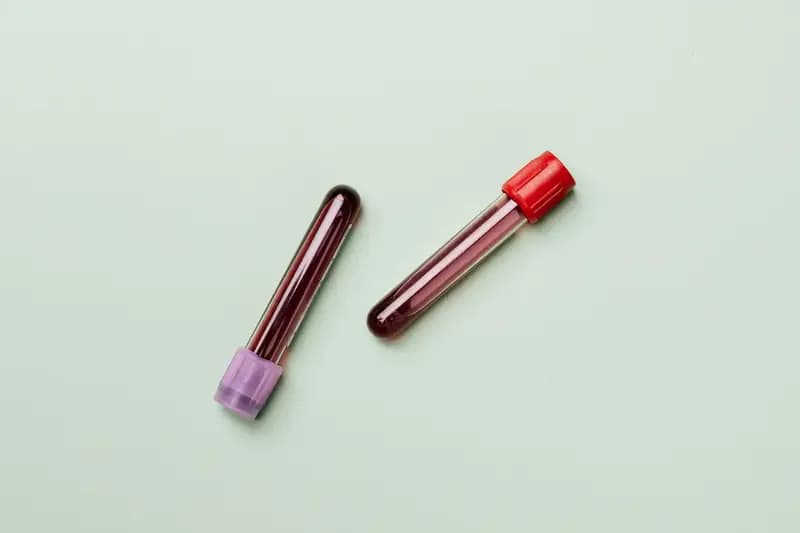
A blood sample is drawn from the patient and processed to separate the serum. The serum contains antibodies that may react with the Salmonella antigen.

1. Blood Sample Collection:

The serum is mixed with Salmonella O and H antigens in test tubes or on a slide to observe agglutination.

2. Mixing with Antigens:

After mixing, the sample is incubated at 37°C for 16-24 hours, and the degree of agglutination is observed under a microscope.

3. Incubation & Observation:

Interpreting Widal Test Results

The results of the Widal test depend on the agglutination levels observed:
A significant rise in O or H antibody titers (above 1:160) indicates active or recent typhoid infection.

Positive Result:

Low antibody titers (below 1:80) suggest no active infection or an early-stage infection not yet detectable.

Negative Result:

False positives may occur due to previous typhoid infections or cross-reactivity with other bacteria. Endemic regions often have individuals with naturally high baseline titers.

Limitations:

FAQs About the Widal Test

The Widal test is useful in endemic areas but has limitations such as cross-reactivity and false positives. Modern tests like blood cultures provide more accurate results.

Is the Widal test reliable?

The test usually takes 24-48 hours, depending on laboratory processing times.

How long does it take to get Widal test results?

Yes, managing blood sugar levels is crucial for typhoid recovery. Check out the sliding scale insulin chart guide for better diabetes management.

Is there a correlation between typhoid and diabetes?

Conclusion

The Widal test remains a widely used diagnostic tool for typhoid fever, especially in areas with limited resources. However, for accurate confirmation, additional diagnostic tests like blood cultures and PCR should be considered where available.

About Zocvi

Zocvi connects patients with verified doctors and evidence-based health guidance. Visit zocvi.com or reach us on WhatsApp at +91-92724-57637.


Follow Zocvi

Stay connected with Zocvi for expert health advice. Follow us on Facebook, LinkedIn, and Instagram.

Frequently Asked Questions

How reliable is the Widal test for diagnosing typhoid?

The Widal test has significant limitations and is now considered unreliable when used alone for typhoid diagnosis. False positives are common — endemic areas have background elevated titers from past exposure or vaccination, and cross-reaction occurs with other Salmonella species, malaria, dengue, and viral infections. False negatives happen in the first week of illness (before antibody rise), in immunocompromised patients, and with early antibiotic treatment. Baseline elevated titers are a real problem: in endemic Indian regions, 5-25% of asymptomatic healthy people have Widal titers of 1:80 or higher just from past exposure — so a single elevated titer is meaningless. Proper interpretation requires paired samples 7-14 days apart showing a 4-fold rise — rarely done in practice. The low cost of Widal makes it commonly used but leads to overdiagnosis and unnecessary antibiotics. Modern gold standard: BLOOD CULTURE — collect 3-5 ml blood in specialised bottles before antibiotics; positive in 70-90% of cases in the first week, declining thereafter; identifies exact organism and antibiotic sensitivity. Better alternatives: blood culture always preferred; bone marrow culture (over 90% sensitivity even after antibiotics); Typhidot IgM (more specific than Widal, positive from day 3-5); Enterocheck WB rapid test; IDL Tubex immunoassay. WHO recommends against Widal test where blood culture is available.

How is typhoid actually diagnosed and treated correctly?

Diagnostic approach: (1) Blood culture in first week (best sensitivity 70-90%) — do BEFORE any antibiotics; (2) If already on antibiotics or blood culture negative but strong suspicion — bone marrow culture (>90% sensitivity even after antibiotics); (3) Typhidot IgM as adjunct (positive day 3-5); (4) Widal only if better tests unavailable — interpret with caution using paired samples showing 4-fold rise. Clinical clues: gradual stepwise fever rise over week, relative bradycardia (pulse slower than expected for fever), abdominal pain, constipation initially then diarrhoea (‘pea-soup’ stools classic), rose spots (small blanching macules on trunk — often missed), splenomegaly, hepatomegaly. Treatment (based on culture sensitivity): (1) UNCOMPLICATED CASES — Azithromycin 500mg once daily for 7-10 days (first-line India due to widespread fluoroquinolone resistance); OR Cefixime 200mg BD for 10-14 days; (2) COMPLICATED/SEVERE — Ceftriaxone 2g IV once daily 10-14 days; ICU admission if severe; (3) MDR/XDR TYPHOID (increasing in India, especially Sindh-linked strains) — meropenem or azithromycin per sensitivity; specialist care needed; (4) DEFERVESCENCE takes 3-7 days on appropriate antibiotic; incomplete response = check compliance, sensitivity, complications; (5) SUPPORTIVE CARE — hydration, nutrition, paracetamol for fever, monitor for complications (intestinal perforation, bleeding, myocarditis, hepatitis). Complications: 10-15% untreated cases develop severe complications; intestinal perforation 1-3% (surgical emergency).

How can typhoid be prevented — vaccination and hygiene?

Typhoid remains endemic across India with 400,000+ cases annually. Prevention: (1) VACCINATION — Multiple vaccines available: (a) Typbar TCV (Bharat Biotech) — typhoid conjugate vaccine; single dose from 6 months; long-lasting protection; ~85% effective; WHO-prequalified; (b) Typhim Vi / Typherix — polysaccharide vaccine; single dose age 2+; needs booster every 3 years; ~55-72% effective; (c) Vivotif (oral live typhoid) — 4 capsules alternate days; less used in India. RECOMMENDED FOR: children 9 months+ under UIP (recently added), travellers to endemic areas, food handlers, laboratory workers, healthcare workers, household contacts of chronic carriers, high-risk residents. (2) FOOD & WATER HYGIENE — (a) Drink only boiled/filtered water (RO + UV) or sealed bottled water from trusted brand (check seal, expiry); (b) Avoid ice from unknown source; (c) Avoid street food, especially cut fruits, chutneys, sauces sitting out; (d) Eat only thoroughly cooked hot food; (e) Wash hands with soap before eating, after toilet; (f) Peel your own fruits; (g) Avoid raw vegetables/salads at questionable restaurants. (3) SANITATION — safe waste disposal, treated water supply, hand hygiene education. (4) CARRIER DETECTION — some patients become chronic carriers (Salmonella typhi in gallbladder); stool culture screening for food handlers, healthcare workers. (5) OUTBREAK RESPONSE — public health notification, contact tracing, source investigation, mass vaccination if indicated. India needs multipronged approach: universal typhoid conjugate vaccination in childhood + hygiene infrastructure + antimicrobial stewardship to prevent XDR typhoid emergence.

Questions About This Article

Have a question? Ask the author directly.

Have a question about this article?

Ask Zocvi Editorial directly. Your question may help others with similar concerns.

Q:1 answer
Q:1 answer
Q:1 answer

Comments (0)

Found this helpful? Share it!

LinkedInWhatsApp

More from Zocvi Editorial

Find a Doctor for Travel Health

Verified specialists across India

Dr. Gyaneshwar

General Physician

Dehradun

Family Clinic, Rajhans Plaza
Kulhan, Dehradun, Uttarakhand, 248013
Fee on request

Dr. Sonal Jain

General Physician

16 yrs

Hyderabad

Dr. Sonal's Health Care Centre
Devi Laxmi Bagh, Hyderabad, Telangana, 500029
₹600 consultation

Dr. Arvind Agarwal

General Physician

41 yrs

Bareilly

Tiwari Market, Opposite Ram Janki Mandir, Janakpuri
Janakpuri, Bareilly, Uttar Pradesh, 243122
₹600 consultation

Dr. Kapil Bhola

General Physician

25 yrs

Kota

S N Pareek Memo. Hospital
Talwandi, Kota, Rajasthan, 324005
₹300 consultation