
Overview
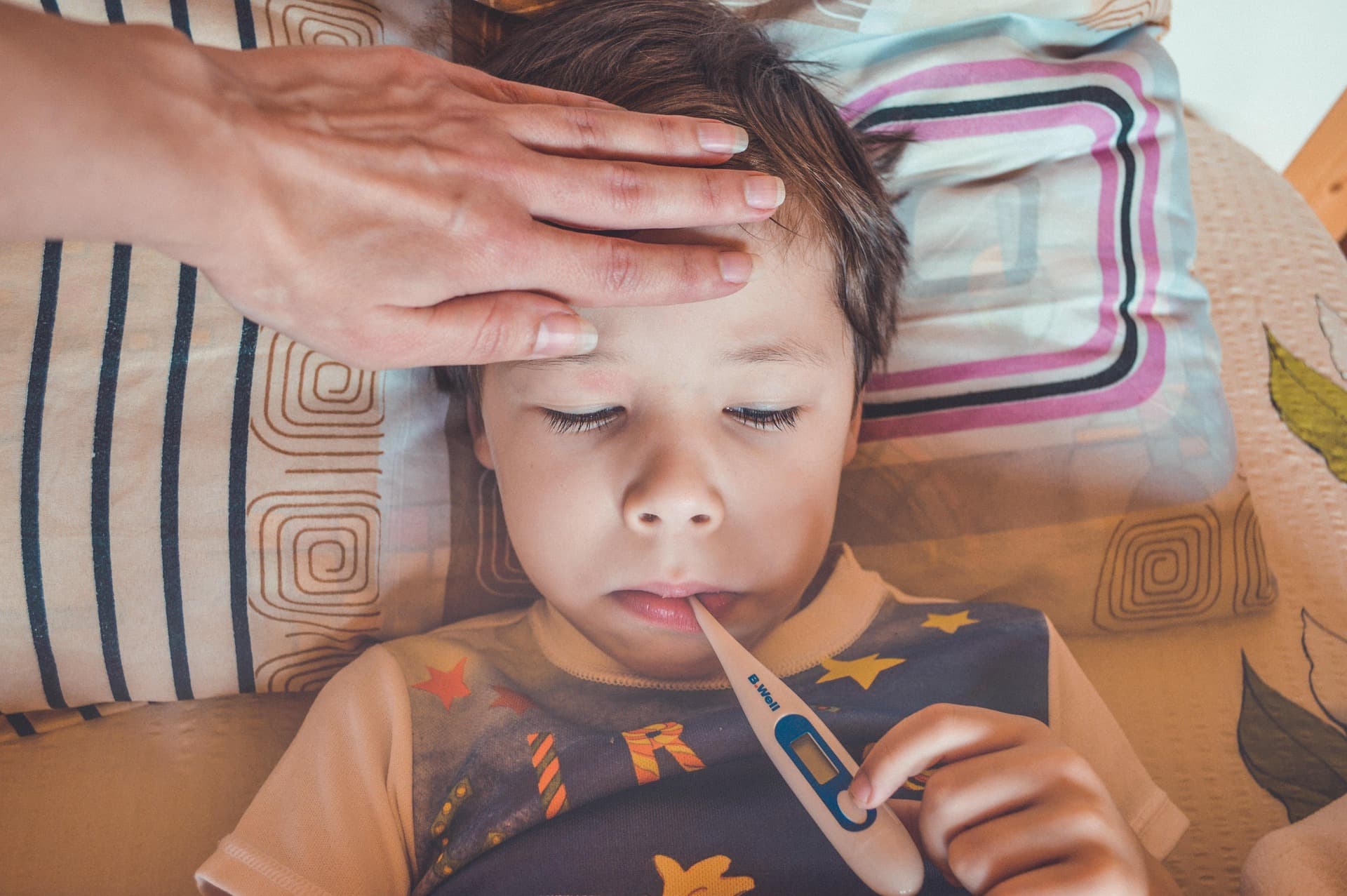
A warm forehead can make any parent anxious—especially when the fever appears at night.
The first instinct is often to look at the thermometer and ask, “How high is too high?” But when a child has a fever, the temperature is only one part of the picture.
A child with a temperature of 102°F who is drinking, interacting and occasionally playing may be less concerning than a child with a lower temperature who is unusually sleepy, struggling to breathe or refusing fluids.
That is why knowing what to watch for—not just what number appears on the thermometer—can help parents decide when a fever can be monitored at home and when medical attention is needed.
What Counts as a Fever in a Child?
A temperature of 38°C (100.4°F) or higher is generally considered a fever.
Fever itself is not a disease. It is usually the body's response to an infection, commonly a viral infection, although bacterial infections can also cause fever.
Children with fever may also:
- Feel hot or flushed
- Sweat
- Become more tired or irritable
- Drink more than usual
- Have reduced appetite
- Develop symptoms related to the underlying infection, such as cough, runny nose, sore throat, ear pain, vomiting, diarrhoea or rash
The symptoms accompanying the fever can provide important clues about how unwell the child is.
The Most Important Question: How Is Your Child Behaving?
This is something parents sometimes overlook.
Instead of repeatedly checking the thermometer every few minutes, look at your child.
Ask:
Are they responding normally?
Are they drinking?
Are they breathing comfortably?
Are they waking and interacting with you?
Are they passing urine?
A child who is uncomfortable but becomes more alert, drinks fluids and interacts after fever medicine is generally more reassuring than a child who remains unusually lethargic or appears very unwell.
Warning Signs Parents Should Not Ignore
Seek urgent medical attention if your child with fever develops any of the following:
1. Difficulty breathing
Watch for:
- Breathing much faster than usual
- Grunting
- The skin pulling in around the ribs or chest
- Significant breathlessness
- Blue, grey or unusually pale lips or skin
Breathing difficulty is more important than the fever number itself and can indicate a serious infection or other medical problem.
2. Unusual sleepiness or difficulty waking
A sleepy child may simply be tired.
The concerning sign is a child who is very difficult to wake, unusually confused, poorly responsive or not behaving normally when awake.
3. Signs of dehydration
Fever can increase fluid losses, particularly when accompanied by vomiting, diarrhoea or poor drinking.
Look for:
- Much fewer wet nappies or urination
- Very dry mouth
- No tears when crying
- Sunken eyes
- Refusing or being unable to drink
Dehydration is particularly important to watch in babies and younger children.
4. A concerning rash
A fever accompanied by an unexplained rash deserves medical attention.
One particularly important warning sign is a rash that does not fade when pressed with a glass or finger. This can be associated with serious infection and requires urgent assessment.
5. Stiff neck, seizure or abnormal behaviour
A stiff neck, seizure, confusion or marked change in responsiveness can be a medical emergency.
Parents should not wait for the fever to become “high enough” before seeking help if these symptoms occur.
Fever in Babies: When Age Changes the Advice
Age matters.
A baby younger than 3 months with a temperature of 38°C (100.4°F) or higher should receive prompt medical assessment, even if the baby otherwise seems relatively well.
Very young babies can develop serious infections without showing the same obvious symptoms seen in older children.
For this reason, parents should not simply give fever medicine and wait at home when a young infant has a documented fever.
How Long Can a Fever Last?
Many childhood fevers associated with common infections settle within several days. The NHS notes that fever in children commonly returns to normal within 1–4 days.
However, duration matters when deciding whether a child needs evaluation.
Contact your child's healthcare professional if:
- The child is getting worse rather than better
- The fever keeps returning
- The child remains unusually unwell even after the temperature comes down
- A fever persists beyond the period your healthcare professional has advised you to monitor
- You are concerned about the child's overall condition
The American Academy of Pediatrics advises contacting a doctor when fever lasts more than 3 days in children aged 2 years or older, while younger children may need assessment sooner depending on their age and symptoms.
What Parents Can Do at Home
For a child who is otherwise alert, breathing comfortably and able to drink, supportive care is usually the main focus.
Encourage fluids
Offer frequent fluids. For babies, continue breastfeeding as usual.
Keep your child comfortable
There is no need to bundle a feverish child under multiple blankets.
Use comfortable clothing and avoid overheating.
Fever medicine is mainly for comfort
Paracetamol/acetaminophen or ibuprofen may be used when appropriate for the child's age and situation, but dosing should follow the product instructions or advice from a healthcare professional.
Never give aspirin to children under 16.
Do not routinely alternate paracetamol and ibuprofen unless a healthcare professional specifically advises you to do so.
What About Sponging or Cold Baths?
Trying to “force” the temperature down is not usually necessary.
The American Academy of Pediatrics advises against ice packs and alcohol baths, while the NHS advises against undressing or sponging children simply to cool them down.
The goal is not necessarily to make the thermometer show a normal number.
The goal is to keep the child comfortable, hydrated and closely observed for signs of deterioration.
Fever Medicine Worked—Does That Mean the Illness Is Not Serious?
Not necessarily.
A child may temporarily become more comfortable after fever medicine, but that does not identify the cause of the fever.
Likewise, a fever that does not immediately return to normal does not automatically mean something serious is happening.
What matters is the overall clinical picture: breathing, hydration, alertness, pain, new symptoms and how the child is behaving.
A Simple Parent Checklist
When your child has a fever, keep track of:
| What to watch | Why it matters |
|---|---|
| Temperature | Confirms whether there is a fever and tracks the trend |
| Drinking | Helps identify dehydration risk |
| Urine/wet nappies | Useful indicator of hydration |
| Breathing | Difficulty breathing can signal serious illness |
| Alertness | Unusual drowsiness or confusion is concerning |
| Rash | Some rashes require urgent assessment |
| Vomiting/diarrhoea | Can increase dehydration risk |
| Pain | Ear, throat, abdominal or other pain may help identify the cause |
| Duration | Persistent fever may require medical evaluation |
When Should Parents Go to Emergency Care?
Do not focus only on the temperature reading.
Seek emergency medical help if a child with fever has severe difficulty breathing, is difficult to wake, is not responding normally, has a seizure, has a stiff neck, develops a non-blanching rash, becomes blue or grey, or appears seriously unwell.
And remember: a very sick-looking child needs assessment even if the fever itself is not extremely high.
The Bottom Line
Most fevers in children are caused by infections and settle with time and supportive care. But parents should not judge severity from the thermometer alone.
The most useful things to monitor are your child's behaviour, breathing, hydration, urine output and any new symptoms.
If your child is very young, unusually sleepy, struggling to breathe, unable to drink, severely dehydrated, having a seizure, developing a concerning rash or simply seems significantly worse, seek medical advice promptly.
When in doubt about a sick child, it is reasonable to contact a pediatrician rather than waiting for the fever number to rise.




Comments (0)