

Overview
The Importance of Hand Hygiene in Healthcare
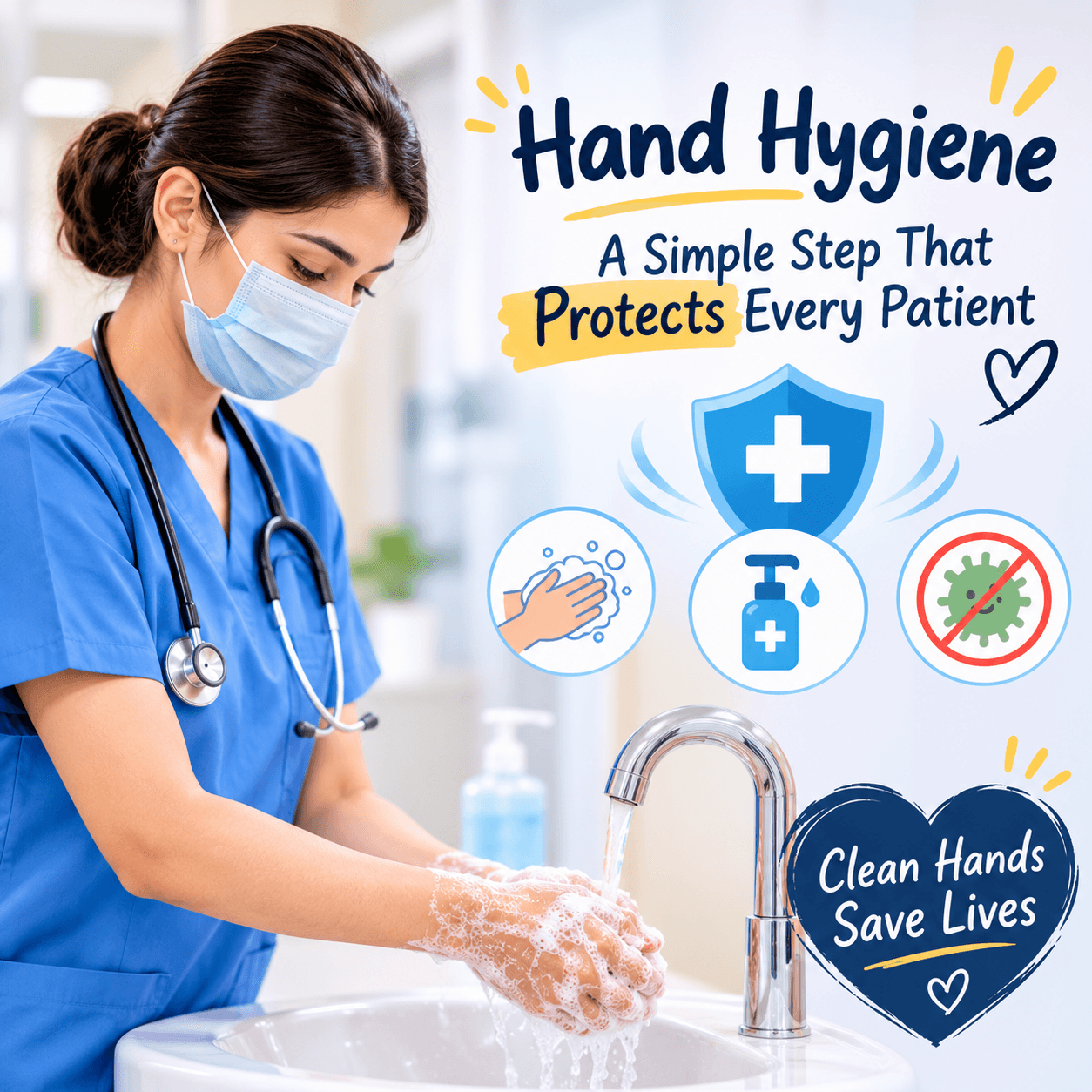
As a nurse, one of the simplest yet most important practices I follow is hand hygiene. It may take only a few seconds, but it plays a vital role in preventing the spread of infections and keeping patients safe.
The WHO's 5 Moments of Hand Hygiene
According to the World Health Organization (WHO), healthcare professionals should follow these five critical moments for hand hygiene:
- Before touching a patient: To prevent harmful germs from spreading from our hands to the patient.
- Before a clean or aseptic procedure: To reduce the risk of introducing microorganisms into the patient's body during procedures such as injections, wound dressing, or catheter care.
- After body fluid exposure risk: To protect ourselves and the healthcare environment from potential infection.
- After touching a patient: To prevent the spread of germs from the patient to other people and surfaces.
- After touching a patient's surroundings: Even if we haven't directly touched the patient, surfaces such as bed rails, bedside tables, and medical equipment can carry germs.
Important Reminders for Effective Hand Hygiene
Here are a few key reminders to ensure effective hand hygiene:
- Use an alcohol-based hand rub for routine clinical hand hygiene when hands are not visibly soiled.
- Wash hands with soap and water when they are visibly dirty.
- Always clean your hands before putting on and immediately after removing gloves.
- Remember, wearing gloves does not replace hand hygiene.
Why Hand Hygiene Matters
Good hand hygiene helps prevent healthcare-associated infections, reduces the transmission of harmful microorganisms, and protects both patients and healthcare workers. A simple habit can make a significant difference. Clean hands save lives!
Let's make hand hygiene a priority in every patient interaction.
Comments (0)