
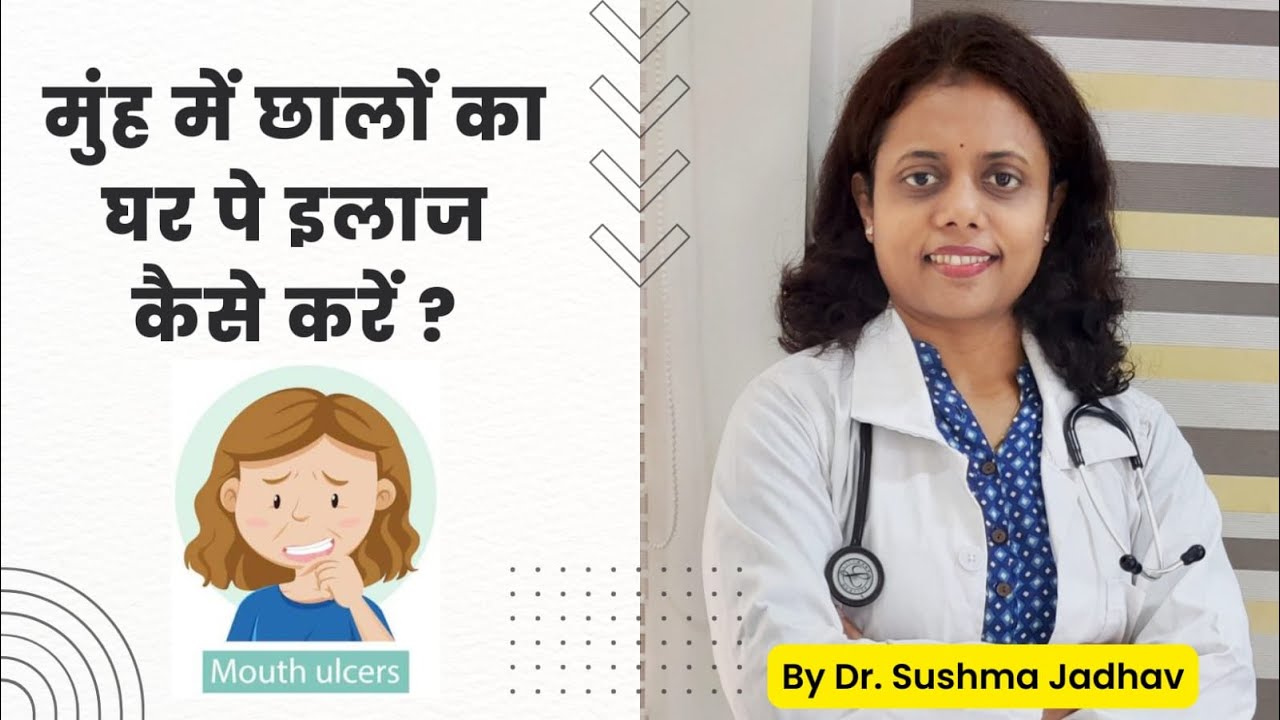
मुंह में छालों का घर पे इलाज कैसे करें ? | Learn with Dr. Sushma Jadhav

Dental decay (caries) is the most widespread chronic disease in the world — affecting more people than any other condition, including diabetes and hypertension. In India, surveys show that over 60% of children and a significant majority of adults have untreated tooth decay. The mechanism is straightforward: bacteria in the mouth (primarily Streptococcus mutans) ferment dietary sugar, producing acid that dissolves tooth enamel. Left untreated, decay progresses from enamel into dentine, then into the pulp — causing pain, abscess, and ultimately tooth loss. Decay is almost entirely preventable with fluoride toothpaste, reduced sugar frequency, and regular dental check-ups. When detected early, it is treated simply with a filling. The tragedy of dental decay in India is not the disease itself but the late presentation — when a simple filling becomes a root canal or extraction.
Last reviewed: 10 August 2026

Dr Aniket & Bhakti Kasodekar| PainlessLaserDentistry |Baner Pune on Instagram: "🦷 “Ignore your teeth and they’ll go away… literally. 👻Cavities don’t take days off — brush, floss, and show up for your smile! 😬✨🦷 Cavity Care Instructions🦠Get it Treated Promptly:Don’t delay your dental filling or treatment — untreated cavities worsen over time.🦠Maintain Oral Hygiene:Brush twice daily with fluoride toothpasteFloss at least once a day to remove food between teethRinse with an antibacterial mouthwash if advised🦠Avoid Sugary & Acidic Foods:Limit sweets, sodas, and acidic snacks which feed cavity-causing bacteria.🦠Use Fluoride Products:Fluoride strengthens enamel and helps prevent further decay.🦠Watch for Warning Signs:Sensitivity, pain, or dark spots may signal new or worsening cavities — report them early.🦠Attend Regular Checkups:Visit your dentist every 6 months for cleanings and early cavity detection.🦠Post-Filling Care (if treated):Avoid hard/sticky foods for 24 hours if you had a fillingMild sensitivity is normal for a few daysContact your dentist if pain persists or worsensContact Us:📞 +91 7019602137📧 houseoftoothpune@gmail.com🌐 www.houseoftooth.in#ToothTruth #CavityAlert #DentistSays #floss #teethbrushing #OralCareMatters#houseoftoothpune #balewadihighstreet #cavityfree✔️ #bestdentalclinicbaner #bestdentalclinicbalewadi #dentistnearme#dentistpune#bracesinbalewadi #bracesinbaner #aligners #invisaligninpune"

Dr Aniket & Bhakti Kasodekar| PainlessLaserDentistry |Baner Pune on Instagram: "🦷 “Ignore your teeth and they’ll go away… literally. 👻Cavities don’t take days off — brush, floss, and show up for your smile! 😬✨🦷 Cavity Care Instructions🦠Get it Treated Promptly:Don’t delay your dental filling or treatment — untreated cavities worsen over time.🦠Maintain Oral Hygiene:Brush twice daily with fluoride toothpasteFloss at least once a day to remove food between teethRinse with an antibacterial mouthwash if advised🦠Avoid Sugary & Acidic Foods:Limit sweets, sodas, and acidic snacks which feed cavity-causing bacteria.🦠Use Fluoride Products:Fluoride strengthens enamel and helps prevent further decay.🦠Watch for Warning Signs:Sensitivity, pain, or dark spots may signal new or worsening cavities — report them early.🦠Attend Regular Checkups:Visit your dentist every 6 months for cleanings and early cavity detection.🦠Post-Filling Care (if treated):Avoid hard/sticky foods for 24 hours if you had a fillingMild sensitivity is normal for a few daysContact your dentist if pain persists or worsensContact Us:📞 +91 7019602137📧 houseoftoothpune@gmail.com🌐 www.houseoftooth.in#ToothTruth #CavityAlert #DentistSays #floss #teethbrushing #OralCareMatters#houseoftoothpune #balewadihighstreet #cavityfree✔️ #bestdentalclinicbaner #bestdentalclinicbalewadi #dentistnearme#dentistpune#bracesinbalewadi #bracesinbaner #aligners #invisaligninpune"

A 13-year-old patient with a fractured incisor was treated using a bespoke E-max Maryland bridge, thoughtfully chosen to preserve natural tooth structure while delivering seamless esthetics. Our...

A 13-year-old patient with a fractured incisor was treated using a bespoke E-max Maryland bridge, thoughtfully chosen to preserve natural tooth structure while delivering seamless esthetics. Our...
Verified specialists across India
A cavity forms when acid produced by bacteria dissolves the mineral structure of tooth enamel. The process begins with a white or chalky spot on the tooth surface (early enamel demineralisation — reversible at this stage with fluoride). Without intervention, the soft spot deepens into the dentine (the layer below enamel) — causing sensitivity to sweet, cold, or hot. When decay reaches the pulp (nerve), constant pain begins — often severe, spontaneous, and worse when lying down. By this point, a filling is no longer sufficient; root canal or extraction is needed. Early cavities may have no symptoms at all — detected only on dental X-rays at a routine check-up. This is exactly why 6-monthly dental visits matter: catching decay at the white spot or early enamel stage prevents it ever becoming painful or requiring root canal.
Not always. Very early enamel decay (the white spot stage, before the enamel surface has broken down) can be remineralised and halted without drilling. Treatment: fluoride varnish applied by the dentist, high-fluoride prescription toothpaste, improved oral hygiene, and dietary changes to reduce sugar frequency. This is called 'non-operative management' or 'watch and wait' — effective when decay hasn't yet penetrated the enamel surface. Once the cavity has broken through enamel into dentine, a filling is necessary to prevent further progression. Early dentine cavities: a small filling. Advanced dentine cavity: a larger filling or crown. Pulp involvement: root canal treatment, then a crown. Complete tooth destruction: extraction. The principle: the earlier the intervention, the simpler and cheaper the treatment. Each stage of progression roughly doubles the cost and complexity.
Two main filling materials for routine cavities: composite resin (tooth-coloured filling) and dental amalgam (silver-coloured). Composite resin bonds to tooth structure, requires less removal of healthy tooth, looks natural, and is the standard for front teeth and increasingly preferred for back teeth. It is slightly less durable than amalgam in high-load back teeth and costs more. Dental amalgam (mercury alloy) is highly durable, cheaper, and more forgiving in moisture-contaminated environments — but silver-coloured and contains mercury (though at levels considered safe by WHO and dental regulators for most patients). India is phasing down amalgam use per the Minamata Convention. Glass ionomer cement is used in children's milk teeth and around gum margins — it releases fluoride. Ceramic inlays/onlays are used for larger restorations where maximum aesthetics and longevity are required. Your dentist recommends based on the cavity size, location, and your bite forces.
Yes — milk (primary) teeth with decay should be filled, not simply extracted because 'they'll fall out anyway.' Reasons: milk teeth hold space for permanent teeth — early extraction causes adjacent teeth to drift, potentially causing crowding and need for orthodontic treatment later. Infected milk teeth can affect the developing permanent tooth bud beneath. Toothache pain from untreated decay affects eating, sleep, and school attendance. Root canals in milk teeth (pulpotomy or pulpectomy) are simpler than in adults and are appropriate when decay has reached the nerve. The exception: a milk tooth very close to natural exfoliation (falling out on its own in 6 months or less) with a cavity that hasn't reached the nerve may reasonably be monitored without filling. A paediatric dentist assesses the tooth's stage of root resorption to make this call.
The critical factor is not how much sugar you eat but how often — bacteria need 20-40 minutes after a sugar exposure to produce acid and attack enamel. Three sugar exposures per day (at mealtimes) produce three acid attacks. Constant sipping of sweet tea, juice, soft drinks, or sports drinks throughout the day creates continuous acid attacks all day. High-risk behaviours: sipping sugary drinks all day, eating frequent sugary snacks between meals, drinking fruit juice in a bottle overnight (causes rampant early childhood decay). Lower-risk: eating sweets or sugary foods with meals rather than between them (the mealtime acid attack happens regardless — limiting extra snack attacks matters more). Protective foods: cheese (raises mouth pH, stimulates saliva), water (rinsing after eating), and milk. Acidic foods and drinks (citrus, cola, kombucha, vinegar) also erode enamel through acid without bacteria — rinse with water, don't brush immediately after (acid-softened enamel is more vulnerable to brushing).
Ask our medical community. Your question may help others with similar concerns.
No questions yet. Be the first to ask!